

Environment
Newberry residents say Quikrete cement plant blasts damage homes, disrupt daily life
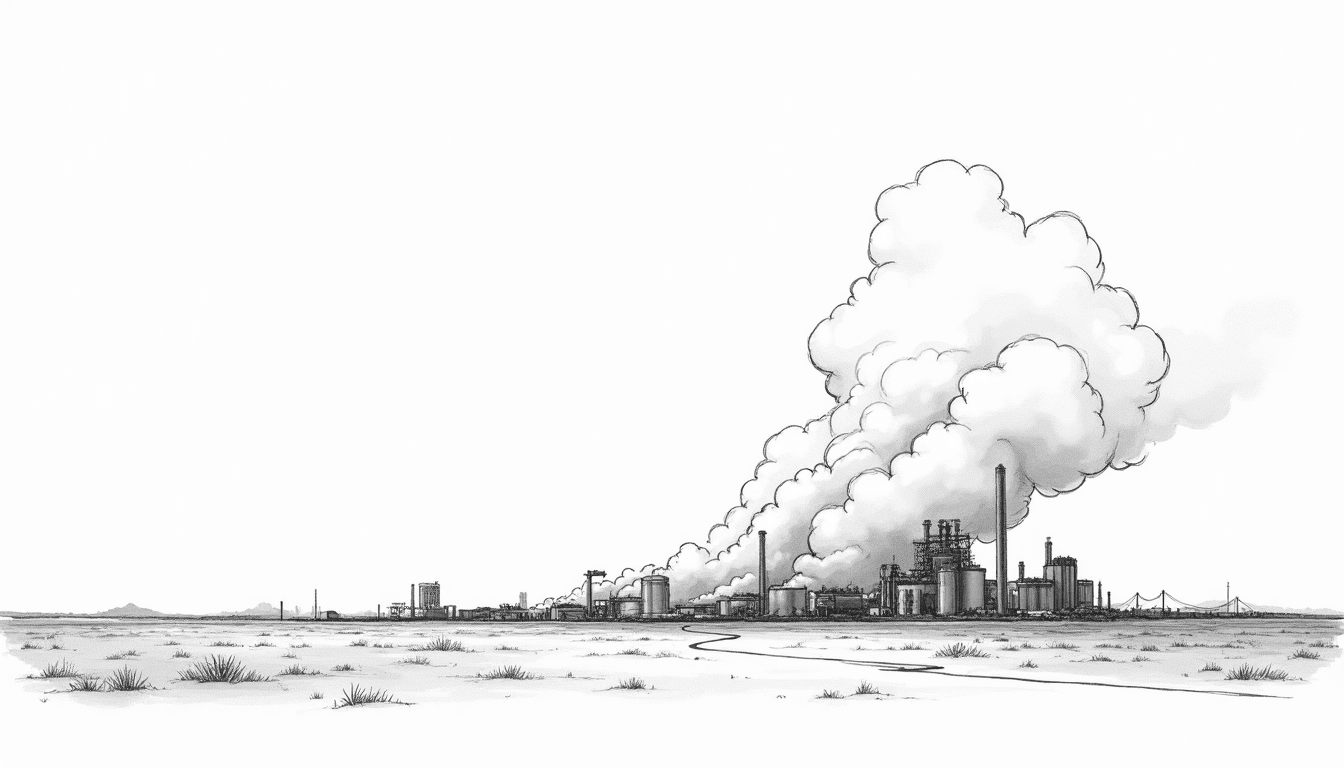
Residents living near a Quikrete cement plant in Newberry report that frequent blasts from the facility cause ongoing noise and dust that damage their homes and interrupt everyday routines. The reporting captures neighbors describing the disturbances as constant and severe, raising questions about the plant’s impact on the surrounding community.
Point / Counterpoint
The Ledger is neutral; these essays are not. Each side, as steel-manned as we can make it.
Point
The residents of Newberry living in the shadow of the Quikrete cement plant deserve to have their complaints taken seriously — not as a matter of political preference, but as a basic question of public health, property rights, and the obligations industrial facilities owe to the communities around them. When neighbors report that frequent blasts crack their walls, coat their yards in dust, and make normal life nearly impossible, that is not a minor inconvenience. It is a chronic injury being inflicted on people who had no meaningful say in whether a heavy industrial operation would be sited next to their homes.
The tension between industrial development and residential quality of life is as old as American manufacturing, but it has never been resolved in a way that simply writes off the neighbors. Environmental regulations, noise ordinances, and nuisance law all exist precisely because the free market, left alone, tends to externalize costs onto the people least able to fight back. When a company’s operations literally shake the foundations of nearby houses, the burden of proof should shift: the company must demonstrate it is operating within acceptable limits, not the residents who must prove harm they live with every day.
Newberry is a small city in Alachua County where residents chose to build lives in what was, for most of its history, a quiet agricultural community. The expansion of heavy industry near residential neighborhoods changes the character of a place in ways that property values, health outcomes, and community cohesion all reflect over time. Industrial dust, particularly from cement operations, is not merely a nuisance — fine particulate matter has well-documented respiratory health consequences, and long-term exposure in residential settings is a legitimate public health concern recognized by the EPA and health researchers alike.
Local officials and state regulators have a responsibility to investigate these complaints with urgency. If the Quikrete facility is operating within its permitted parameters, that is useful information — but it may also mean the parameters themselves need revisiting. Permits are not moral absolution. The community around this plant is not asking for the facility to be shut down; they are asking to be able to live in their own homes without constant disruption. That is a modest and reasonable thing to ask.
Counterpoint
Industrial facilities like the Quikrete cement plant in Newberry play an indispensable role in Florida’s construction economy, and any fair accounting of their presence in a community must weigh both the burdens they impose and the broad benefits they provide. Cement and concrete manufacturing supports the housing, infrastructure, and commercial development that Alachua County and the surrounding region depend on. Before regulators or officials respond to neighborhood complaints by tightening restrictions or threatening operations, they owe the public a clear-eyed look at what is actually happening — and what the consequences of curtailing that operation would be.
Neighborhood grievances, however genuinely felt, are not by themselves evidence of a legal or regulatory violation. The Quikrete facility presumably operates under permits issued by Florida’s Department of Environmental Protection, which set enforceable limits on emissions, noise, and operational practices. If the plant is in compliance with those permits, then the proper response is not punitive action against the company but a deliberate, evidence-based review of whether existing standards are adequate — a process that takes time and expertise, not reactive pressure from a news cycle. Feelings of disruption, while real, must be distinguished from documented harm.
It is also worth noting that industrial and residential land uses have coexisted in tension for generations across American communities, and the resolution is rarely as simple as demanding that industry conform to whatever its nearest neighbors prefer. Zoning and land-use decisions made over years — sometimes decades — determine what kinds of development are permitted in a given area. If residential development has crept closer to an existing industrial site, that changes the political and emotional calculus without necessarily changing the legal one. The responsibility for managing those competing land uses lies with local planning authorities, not solely with the plant.
The broader principle at stake is that Florida needs functioning supply chains for construction materials, and those supply chains require facilities that, by their nature, generate noise, dust, and activity. Cement plants cannot be relocated to uninhabited wilderness; they exist where geology and logistics allow. The community’s concerns deserve a thorough, transparent investigation — but that process should be grounded in data and due process, not in the presumption that industrial presence is inherently incompatible with nearby residential life.
Sources: The Independent Florida Alligator