

Environment
Newberry residents say Quikrete cement plant blasts damage homes, disrupt daily life
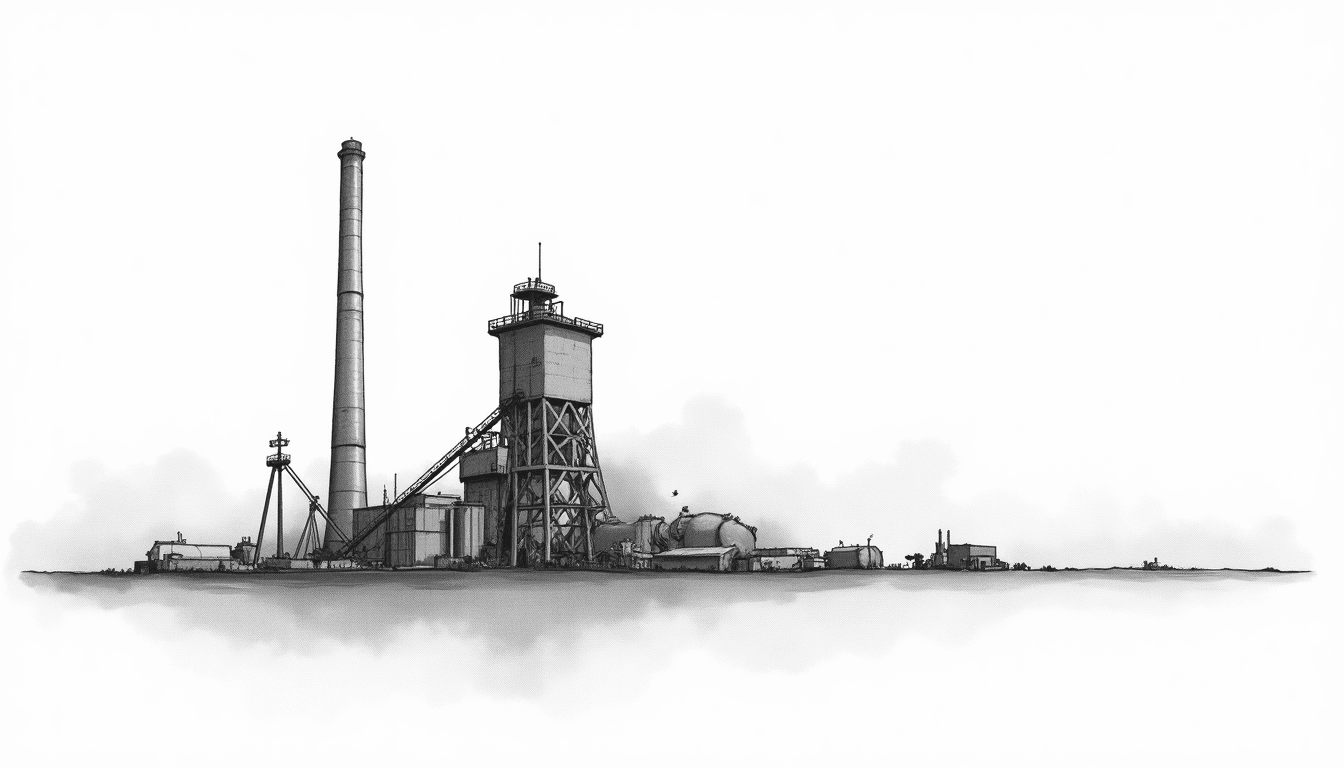
Neighbors living near a Quikrete cement plant on County Road 235 in Newberry say they endure constant noise, dust, and frequent blasts that they claim are damaging their homes and disrupting everyday routines. The complaints highlight ongoing tensions between industrial operations and the residential communities surrounding them in Alachua County.
Point / Counterpoint
The Ledger is neutral; these essays are not. Each side, as steel-manned as we can make it.
Point
The residents of Newberry living near the Quikrete cement plant are not asking for anything extraordinary — they are asking for the basic quality of life that most Floridians take for granted. When blasts from an industrial facility are frequent and forceful enough that neighbors say they damage homes, this is no longer a matter of minor inconvenience. It is a matter of property rights, public health, and whether local government is doing its job to protect the people it serves.
Industrial zoning decisions are made with the understanding that facilities will operate within certain limits — limits on noise, on particulate emissions, on ground vibration. Cement production is inherently intensive, but intensity is not a blank check. Dust from cement manufacturing contains fine particulate matter that, with prolonged exposure, poses documented respiratory risks. When residents describe constant dust settling on their homes and in their yards, they are describing a potential public health burden that falls entirely on them while the economic benefits of the operation flow elsewhere.
There is also a fairness dimension that deserves serious attention. Industrial plants are often sited near lower-income and rural communities precisely because those communities have less political capital to resist them. If Newberry’s neighbors feel unheard, that pattern is worth examining. Local governments have both the legal authority and the moral obligation to enforce noise ordinances, require air quality monitoring, and compel operators to invest in mitigation — sound barriers, dust suppression systems, adjusted blasting schedules — before impacts become irreversible.
The argument that jobs and tax revenue justify any level of disruption to neighboring residents is a false choice. Responsible industrial operation and livable communities are not mutually exclusive. Holding Quikrete to the standards it agreed to when it was permitted is not anti-business — it is the ordinary expectation of a functioning regulatory system. Newberry residents deserve no less.
Counterpoint
Cement and concrete manufacturing are the unglamorous backbone of Florida’s construction economy. Every road repaved, every school built, every hurricane-damaged home repaired requires aggregate and cement products. Facilities like the Quikrete plant in Newberry exist because demand for those materials is real and relentless, and they must be located somewhere — ideally near the limestone deposits and transportation corridors that make production viable. That is precisely what Alachua County’s industrial zoning framework is designed to accommodate.
Complaints about noise and dust from neighbors of long-established industrial sites, while understandable, must be weighed against a broader picture. Zoning maps are public records. Permits are issued through processes that include public notice and opportunity for comment. When residents or developers choose to build or purchase homes near an existing industrial corridor, proximity to that activity is a known condition of the property. The regulatory process already accounts for these trade-offs — the question is whether Quikrete is operating within its permitted parameters, not whether the plant should exist at all.
It is also worth noting that modern cement facilities are subject to federal and state environmental regulations administered by the Florida Department of Environmental Protection and, in some cases, the EPA. If particulate emissions or noise levels genuinely exceed permitted thresholds, those agencies have enforcement authority and residents have complaint channels. The existence of a grievance does not automatically mean a violation has occurred. Regulatory review — not neighborhood pressure campaigns — is the appropriate mechanism for determining whether a facility is out of compliance.
Gainesville and Alachua County need Newberry’s industrial base. The county’s long-term land use planning must balance residential quality of life with the reality that manufacturing and extraction industries generate stable, working-class employment and fund local tax rolls. Demanding that a lawfully operating plant be treated as a nuisance, without first establishing that it has exceeded its legal limits, sets a precedent that could chill future industrial investment in a region that can ill afford to lose it.
Sources: The Independent Florida Alligator