

City
Gainesville commissioners to weigh restricting or banning roam towing
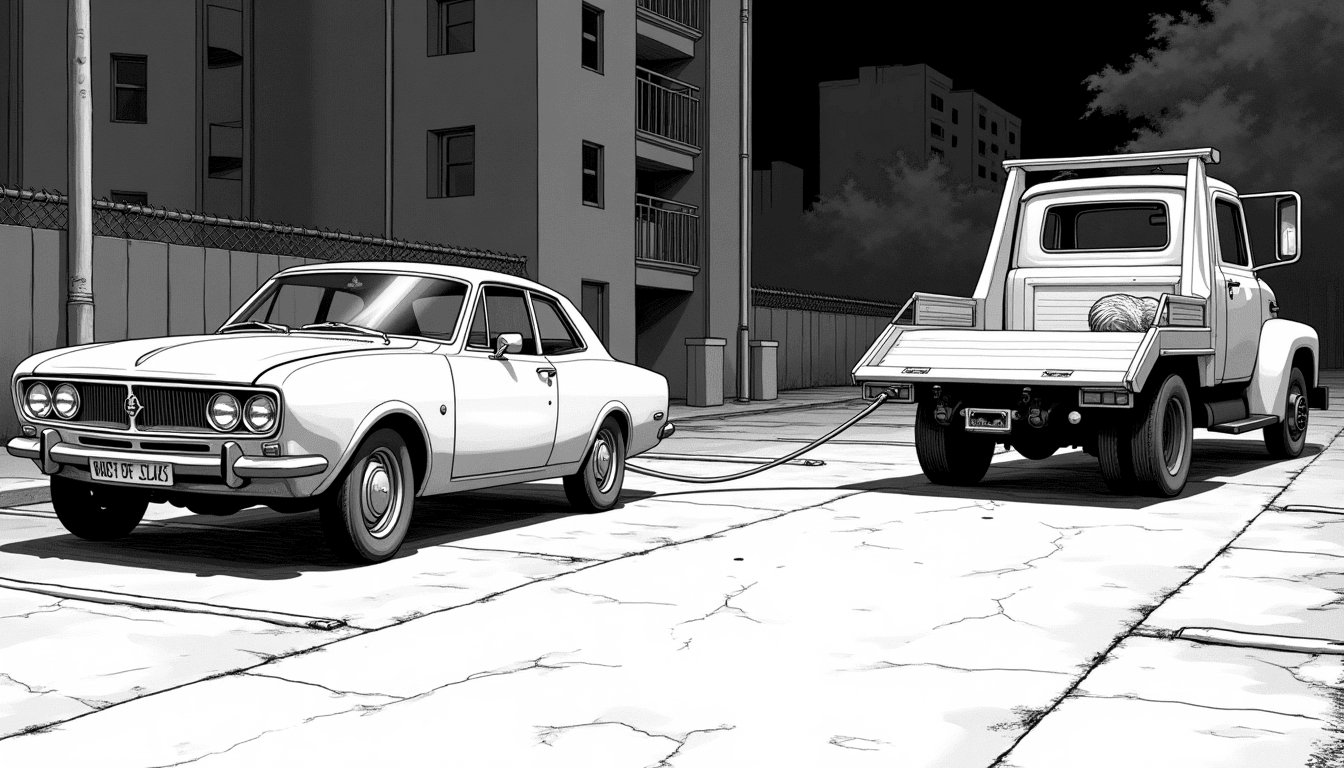
Gainesville city commissioners are set to consider two competing proposals regarding roam towing at a Thursday meeting. One option would limit roam towing and vehicle immobilization to nighttime hours at large residential complexes, while the other would prohibit the practice entirely.
Point / Counterpoint
The Ledger is neutral; these essays are not. Each side, as steel-manned as we can make it.
Point
Roam towing — the practice of towing vehicles without a specific complaint from a property owner — has long been a source of frustration and financial hardship for renters and visitors in cities across Florida. Gainesville’s city commissioners are right to take seriously the option of an outright ban, rather than settling for a partial restriction that would leave residents vulnerable during half of every day.
The case for a complete prohibition rests on basic fairness. Roam towers patrol private lots looking for technical violations — an expired permit, a wheel over a line — and can remove a car within minutes of a vehicle being parked. Residents of large apartment complexes, who often have limited parking alternatives, find themselves paying hundreds of dollars to retrieve their own vehicles, sometimes for infractions that are genuinely ambiguous. A nighttime-only window still leaves a twelve-hour period during which aggressive towing companies can operate freely.
The broader regulatory record supports skepticism toward partial measures. Florida has repeatedly tried to rein in predatory towing through fee caps and notice requirements, yet the industry has consistently found ways to operate at the margins of whatever rules exist. A restriction that limits roam towing to overnight hours may simply shift predatory behavior to those hours, when residents are asleep and less able to monitor their vehicles. Cities that have moved to full bans — requiring a property owner or manager to affirmatively request a tow — have seen dramatic reductions in complaints without meaningful harm to legitimate parking enforcement.
For Gainesville renters, many of whom are students or lower-income residents for whom a surprise towing bill represents a genuine financial crisis, the stakes are high. A complete ban places the burden where it belongs: on property owners who want a vehicle removed to make that call themselves, rather than deputizing for-profit towers to patrol at will. Commissioners should choose the option that provides full protection, not a partial fix that leaves the underlying problem intact.
Counterpoint
The impulse to ban roam towing entirely is understandable, but city commissioners should think carefully before eliminating a parking enforcement tool that many property owners and residents depend on. The more targeted proposal — restricting roam towing to nighttime hours at large residential complexes — strikes a reasonable balance between consumer protection and legitimate property rights.
Property owners, particularly those managing large apartment communities, have a real interest in ensuring that parking areas are available for their tenants and authorized guests. Without some mechanism for removing unauthorized vehicles, lots quickly fill with cars belonging to non-residents, leaving paying tenants without spaces they are entitled to use. Requiring a property manager to personally initiate every tow is not always practical — a manager cannot be on call around the clock, and a car blocking a fire lane or an accessible parking space may need to be removed promptly. Roam towing, properly regulated, serves a genuine function.
The proposed nighttime restriction addresses the most common complaints: predatory towers lurking in lots and removing vehicles within minutes of parking, before residents have any chance to remedy a minor violation. Limiting the practice to the hours between 7 p.m. and 7 a.m. — when unauthorized overnight parking is most likely to be a genuine problem — while requiring affirmative calls during daytime hours captures the legitimate use case while curtailing the most abusive applications. It is a measured, evidence-based approach rather than an ideological one.
A complete ban also raises practical enforcement questions. If roam towing is prohibited entirely, property owners will seek other remedies — including civil litigation, permit systems, or physical barriers — that may impose their own costs and complications on residents. Regulations work best when they are calibrated to the actual harm, not designed to eliminate an entire category of activity. Commissioners should choose the option that reins in bad actors without stripping property owners of reasonable tools for managing their own land.
Sources: WCJB TV20