

City
Alachua residents pack meeting to oppose possible AI data center on U.S. 441
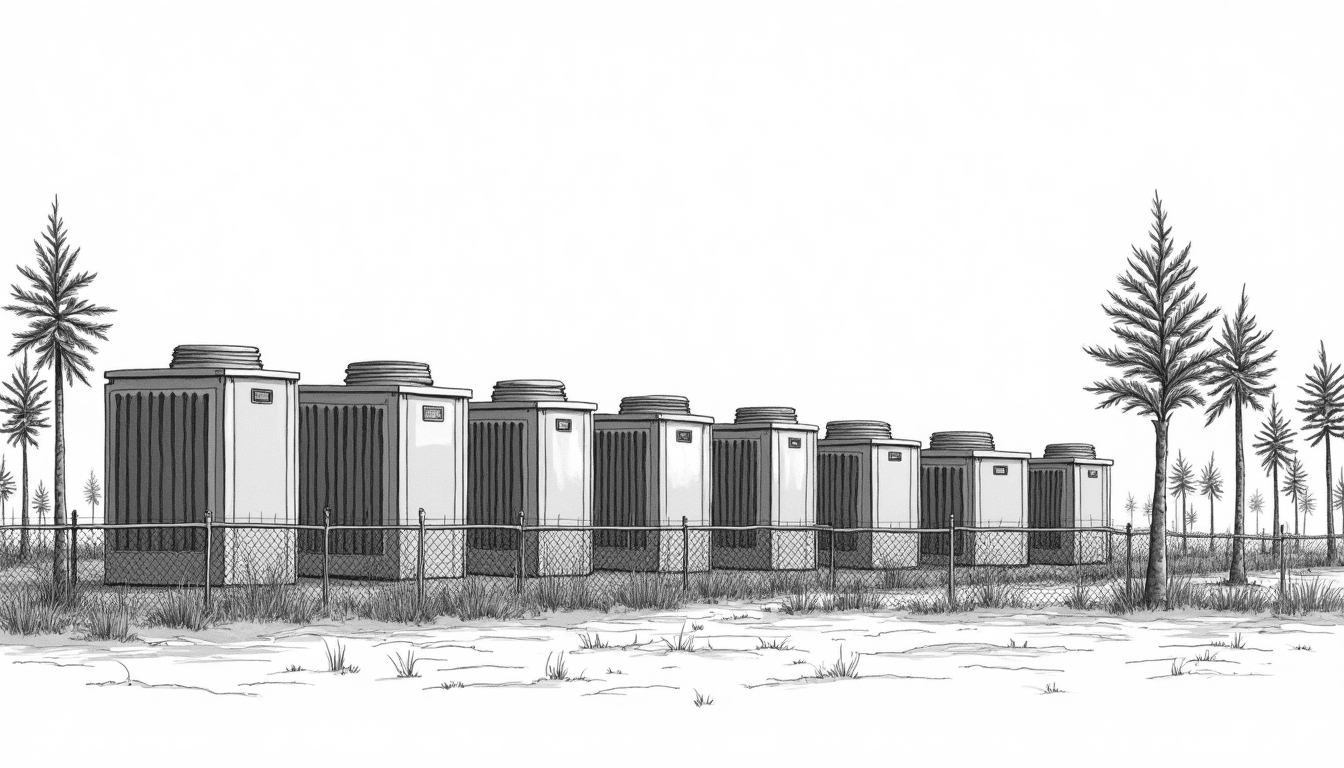
Dozens of Alachua residents spent hours speaking against a potential large-scale data center on a 104-acre parcel along U.S. 441, a site that once housed an Energizer battery plant near San Felasco Tech City. The concerns were sparked by an online real estate listing whose URL referenced a high-megawatt data center development, though the listing’s title has since changed. Residents raised worries about environmental risks and the effect such a facility could have on nearby property values, even though the matter was not formally on the meeting agenda; the city is expected to take up the site in a rescheduled joint Board of County Commissioners meeting.
Point / Counterpoint
The Ledger is neutral; these essays are not. Each side, as steel-manned as we can make it.
Point
The prospect of a large-scale AI data center arriving in Alachua deserves exactly the kind of scrutiny residents brought to this meeting — and city leaders would be wise to treat the public’s alarm not as a nuisance but as a mandate for caution. Data centers are not passive neighbors. Facilities of the high-megawatt scale suggested by the online listing consume enormous quantities of electricity and water, often drawing on local aquifer systems for cooling in ways that strain the Floridan Aquifer that north-central Florida communities depend on for drinking water. In a region already attentive to the health of Ichetucknee and other springs, adding a major industrial water consumer to the watershed is not a trivial decision.
The property’s history should also give planners pause. The former Energizer battery plant site carries the legacy of industrial use, and any large-scale redevelopment of such a parcel requires careful environmental review. Residents who live and pay taxes near U.S. 441 are entitled to know what contaminants may remain in the soil, how stormwater will be managed, and what noise and light pollution a 24-hour server facility would generate in their neighborhood. These are not hypothetical fears; communities adjacent to large data centers in other states have documented ongoing complaints about hum, vibration, and heat discharge.
The property values concern is equally legitimate. Studies of industrial facility siting have repeatedly shown that residents near high-intensity industrial operations — even legally compliant ones — experience reduced home values and heightened difficulty selling. For a mid-sized city like Alachua, where working families have invested in homes along and near U.S. 441, that is a direct economic harm, not an abstraction. The city’s obligation is to those existing residents first.
Finally, the way this potential development surfaced — through a real estate listing rather than a formal city announcement — is itself troubling. Good land-use governance requires transparency from the earliest stages. The fact that residents had to decode a URL to understand what was being contemplated suggests that the process has not given the public the voice it deserves. A rescheduled joint BOCC meeting is a beginning, not an answer.
Counterpoint
The community’s anxiety about a potential data center in Alachua is understandable, but anxiety alone should not drive land-use policy — especially when the rumors are based on a real estate listing whose title has already changed and whose final use remains unconfirmed. Before residents or commissioners move to foreclose a development that has not yet been formally proposed, it is worth considering what a facility of this scale could mean for a city that has long sought to build on its identity as part of a technology corridor anchored by San Felasco Tech City.
Data centers represent some of the most stable, high-value industrial tenants available to mid-sized cities. They generate substantial property tax revenue, create construction and operations jobs, and typically have minimal truck traffic compared to conventional manufacturing or distribution facilities. For a city that inherited a decommissioned industrial site — an old battery plant — the question is not whether industrial use is appropriate on that parcel, but whether a data center is better or worse than the alternatives. The answer, on most dimensions, favors a well-regulated data center.
On the environmental concerns: modern data center operators, particularly those serving AI workloads for major technology companies, operate under intense public and regulatory scrutiny regarding water and energy consumption. Florida already has robust state environmental permitting requirements, and any facility of this scale would face review under those frameworks. The appropriate response to legitimate environmental questions is rigorous permitting conditions — required disclosure of water withdrawal volumes, noise buffers, binding stormwater management plans — not preemptive rejection of an unconfirmed project.
Property value fears, too, deserve a more careful look at the evidence. The relationship between data center proximity and home values is far from uniformly negative; much depends on facility design, buffering, and community engagement. Developers of large-scale facilities increasingly invest in landscaping, setbacks, and community benefit agreements precisely because they have learned that local opposition is costly. Alachua residents are right to demand answers, and city leaders are right to hold a formal joint meeting. But the public interest is best served by informed negotiation over conditions — not a refusal to engage with an economic opportunity that could benefit the entire tax base.
Sources: Mainstreet Daily News · WCJB TV20