

City
Local officials weigh revenue losses from proposed $250,000 homestead exemption
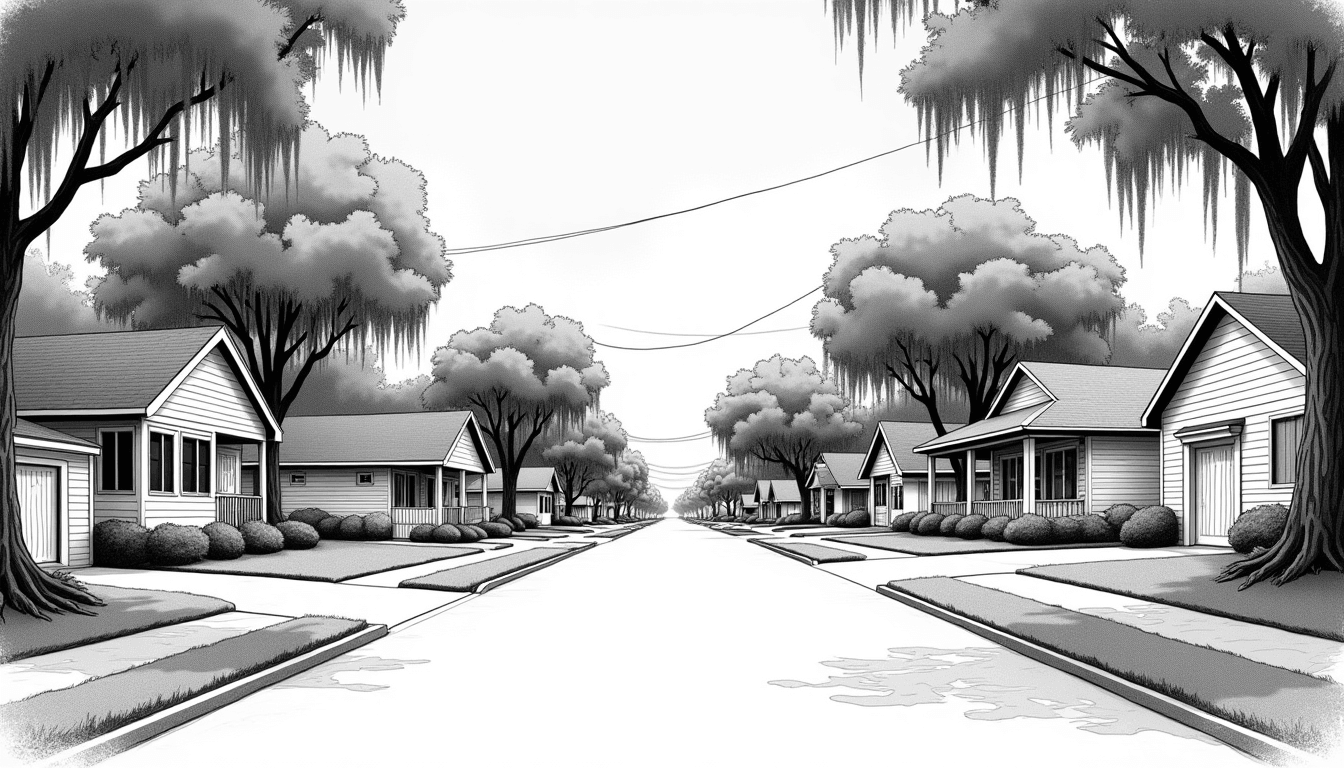
Columbia County commissioners and Alachua County officials are examining the financial impact of a proposed constitutional amendment that would raise the homestead exemption to $150,000 in 2027-28 and $250,000 the following year. A provision that would have replaced lost local revenue — originally included in the governor’s proposal — was stripped out by state lawmakers, leaving officials uncertain how municipalities would cover the shortfall. The Hawthorne mayor has also weighed in against the broader property tax elimination push, and Columbia County board members said they are considering early budget preparations in case voters approve the amendment.
Point / Counterpoint
The Ledger is neutral; these essays are not. Each side, as steel-manned as we can make it.
Point
The proposed homestead exemption expansion represents exactly the kind of meaningful tax relief that Florida homeowners have needed for years. Property values across north-central Florida have surged dramatically in recent cycles, and with them, the effective tax burden on working families and retirees living in homes they have owned for decades. A $250,000 exemption would meaningfully reduce what many households owe each year, keeping residents in their homes and slowing the displacement pressure that rising costs create in communities like Gainesville and Hawthorne.
The argument that local governments cannot absorb any reduction in property tax revenue deserves scrutiny. Local budgets grow steadily during real estate booms, swelling with reassessment-driven windfalls that governments rarely return to taxpayers. If a county or municipality finds itself genuinely unable to fund core services at a slightly lower revenue baseline, that is a signal that spending priorities need examination — not that homeowners must continue absorbing ever-larger tax bills to subsidize institutional budgets that expanded during the boom.
Columbia County Commissioner Rocky Ford’s observation that the budget impact might mean one fewer road paved is an honest and proportionate description of the trade-off — not a catastrophe. Local governments regularly make decisions about service levels. The question is whether those decisions should be made to protect homeowners’ financial stability or to protect agencies from any pressure to tighten priorities. History in Florida and elsewhere suggests that governments facing modest revenue constraints find efficiencies that they would not otherwise have sought.
The deeper principle is that property ownership should not become an endless source of extraction from citizens who have already paid for their homes. As exemptions erode in real value over time, the state has an obligation to update them to reflect current market conditions. Phasing the exemption increase over two years, as this proposal does, gives local governments time to adapt — a reasonable accommodation that weakens the shock-to-services argument further. Voter approval of this amendment would be a legitimate democratic expression of Floridians’ desire for property tax relief.
Counterpoint
The removal of the revenue-replacement provision from this proposal is not a technicality — it is the central problem. When the governor’s original framework included a mechanism to backfill lost local revenue, it acknowledged an obvious truth: counties and municipalities depend on property tax income to fund the police patrols, road maintenance, fire stations, and social services that residents use every day. Stripping that backstop while keeping the exemption intact shifts the entire burden of the policy’s cost onto local governments with no path to recover it.
For smaller cities like Hawthorne, where the tax base is narrow and the margin for absorbing revenue losses is thin, this is not an abstract budget exercise. The Hawthorne mayor’s opposition to property tax elimination reflects the lived reality of governing a small community where the difference between a funded service and a cut service can be measured in response times, road conditions, and park hours. When the Alachua County property appraiser undertakes an analysis of 54,774 homes to model potential revenue loss, that is not bureaucratic hand-wringing — it is responsible governance preparing for a serious fiscal disruption.
The structure of the proposed amendment also raises long-term concerns. A $150,000 exemption in one year expanding to $250,000 the next does not give local governments two years to adapt; it gives them one year to absorb a major cut and a second year to absorb an even larger one. Budget cycles, union contracts, infrastructure commitments, and bonded obligations do not flex on that timeline. The services most likely to be reduced are not administrative overhead but the visible, community-facing functions — road paving, as Commissioner Ford himself acknowledged, or equivalent reductions in public safety staffing and park operations.
Fiscal policy that produces popular savings for homeowners while externalizing the cost onto service recipients — who are often lower-income residents who rent or rely more heavily on public services — is not neutral relief. It is a redistribution of burden dressed as a tax cut. If the state legislature genuinely wants to reduce the property tax load on Florida homeowners, it should accompany that relief with a durable, state-funded replacement mechanism rather than leaving local governments to explain to constituents why the library closed or the pothole went unfilled.
Sources: Mainstreet Daily News · WCJB TV20