

City
State attorney drops enforcement of gun sale waiting periods, including Alachua County’s
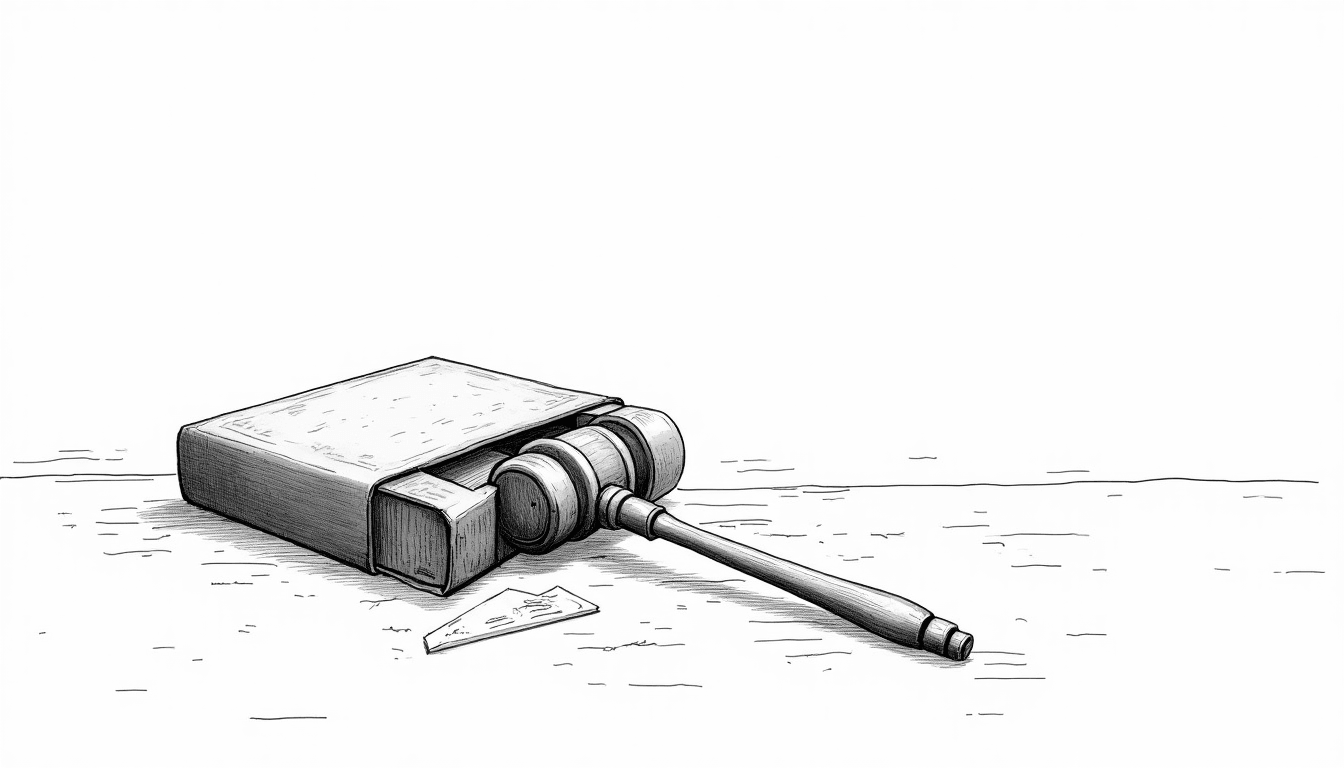
State Attorney Brian Kramer notified Alachua County commissioners Thursday that his office will stop prosecuting violations of gun sale waiting periods, including the county’s own five-day requirement. Kramer cited a federal court ruling that found mandating a waiting period beyond the time needed for a background check is unconstitutional. One of the plaintiffs in that federal case had purchased a shotgun at a Newberry firearms dealer.
Point / Counterpoint
The Ledger is neutral; these essays are not. Each side, as steel-manned as we can make it.
Point
State Attorney Brian Kramer’s decision to stop prosecuting gun sale waiting period violations is the correct response to a federal court ruling that has rendered those laws constitutionally untenable. Prosecutors are not lawmakers; their role is to apply the law as it stands, and when a federal court has determined that extended waiting periods exceed what the Constitution permits, continuing to enforce such rules would be both legally reckless and an abuse of prosecutorial authority. Kramer is not inventing a policy preference — he is following the judicial branch’s instruction.
The constitutional framework here matters. The Supreme Court’s 2022 ruling in Bruen established that firearms regulations must be grounded in the nation’s historical tradition of gun regulation. Waiting periods that extend beyond the time functionally required for a background check have a thin historical pedigree, and federal courts have increasingly scrutinized them under this new standard. When a court with jurisdiction over the relevant parties has already found such a mandate unconstitutional — with one of the plaintiffs coming from Newberry, squarely within Kramer’s circuit — it would be indefensible to keep charging residents under that same legal theory.
Alacha County’s five-day waiting period, whatever its policy merits, does not exist in a vacuum. It is subject to both state preemption law and federal constitutional limits. A local government cannot insulate its ordinances from judicial review simply by expressing a preference for them, and a state attorney who continued to prosecute under an invalidated rule would be exposing the office — and the county — to civil liability while pursuing cases with no realistic prospect of surviving appeal. Prosecutorial discretion, exercised in response to binding legal authority, is exactly what the system demands.
The citizens of Alachua County are ultimately better served by a state attorney who tracks real constitutional boundaries than one who picks politically popular enforcement priorities and ignores federal court rulings. Responsible governance means accepting legal losses gracefully and adjusting enforcement posture accordingly. Kramer’s letter to the commission is a model of institutional accountability, not an act of defiance.
Counterpoint
Whatever one thinks of waiting period laws as a policy matter, a state attorney’s unilateral decision to stop enforcing a duly enacted local ordinance raises serious questions about the separation of powers and the rule of law. Alachua County’s five-day waiting period was passed through a legitimate democratic process. It is not the state attorney’s place to effectively nullify that law by announcing non-enforcement before any court has issued a final, binding judgment that directly commands him to do so. Citing a pending or recent federal case as personal license to stop prosecuting is a dangerous precedent that cuts across political lines.
The specific legal posture matters here. A federal case involving one plaintiff at one Newberry gun shop is not, on its face, a sweeping injunction barring prosecution of all waiting period violations across the Eighth Judicial Circuit. Courts issue injunctions with defined scope; they do not automatically de-enforce every statute that shares a constitutional family resemblance with the challenged rule. If Kramer believes the law is unconstitutional, the appropriate channels are to seek guidance from the Florida Attorney General, to defend the law and create a clean appellate record, or to communicate with the legislature — not to send a letter to county commissioners announcing that he has personally decided the law is void.
The practical consequences of this approach are real. Waiting periods exist because research consistently shows they reduce impulsive gun violence, including suicide. A cooling-off period between purchase and possession has a measurable public safety rationale that has nothing to do with background check processing time — it is about giving individuals in crisis a moment of separation from a lethal means. When a prosecutor decides overnight to stop enforcing that window, he removes a layer of protection from vulnerable residents without any legislative debate or community input.
Finally, there is the broader institutional risk. If state attorneys can selectively nullify local ordinances by pointing to sympathetic federal rulings, the concept of locally enacted public safety law becomes unstable in every direction. The same logic used here could justify non-enforcement of environmental regulations, tenant protections, or any other rule that a prosecutor personally disfavors and can match to a favorable court opinion. The strength of constitutional democracy depends on officials working within their roles — and the role of a prosecutor is not to be the final word on what the Constitution means.
Sources: WCJB TV20