

Environment
Plans to remove over 1,000 trees at UF’s Graham Woods raise conservation concerns
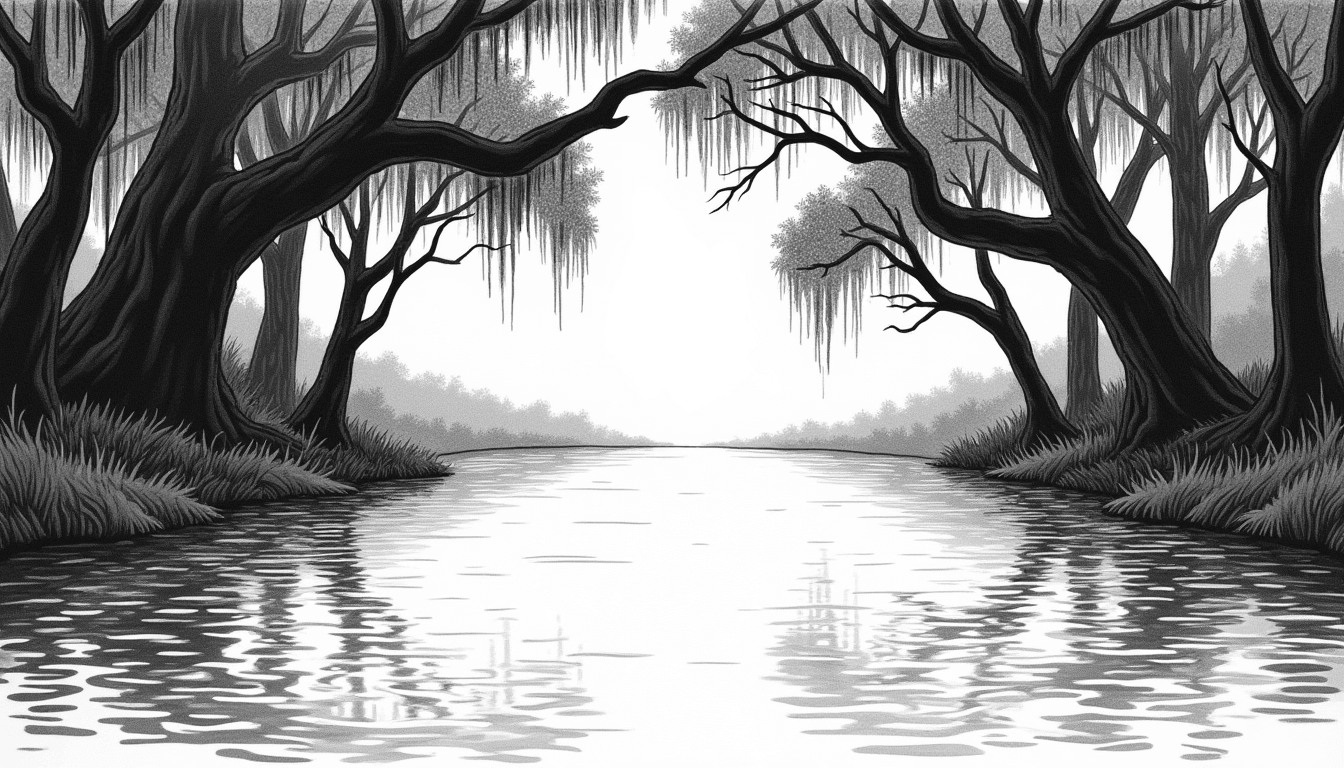
The University of Florida has generally maintained its tree canopy, but a proposal to remove more than 1,000 trees in the Graham Woods and Graham Pond areas has drawn concern from conservationists. The plans put pressure on a campus green space that has so far been largely protected.
Point / Counterpoint
The Ledger is neutral; these essays are not. Each side, as steel-manned as we can make it.
Point
The University of Florida’s stewardship of its campus landscape has long been a point of institutional pride, and rightly so. Gainesville sits in the heart of north-central Florida’s longleaf pine and live oak ecosystem — a region where urban tree canopy provides measurable ecological benefits: stormwater absorption, heat island mitigation, wildlife corridor connectivity, and air quality improvement. Graham Woods and Graham Pond represent not just aesthetic amenities but functioning habitat embedded in a dense campus environment.
Removing more than 1,000 trees from these areas is not a routine maintenance decision. It is a structural alteration of a mature ecosystem that took decades to establish. Mature trees — oaks, pines, and cypress of the kind that populate this part of Florida — cannot simply be replanted and replaced on a human timescale. A sapling planted today will not provide equivalent canopy cover, root stabilization, or habitat value for fifty or more years. The ecological debt incurred by a removal of this scale is essentially permanent from the perspective of anyone alive today.
Conservationists raising alarms about this proposal are not obstructionists. They are applying the same kind of long-term thinking that responsible land stewardship demands. Universities, as institutions with multi-generational time horizons and explicit commitments to sustainability, are precisely the kinds of institutions that should model conservation best practices. UF has sustainability pledges and climate action commitments on the books; removing over a thousand trees in a single green space is difficult to reconcile with those stated values.
The burden of proof should fall on those proposing removal, not on those defending the trees. Before any clearing proceeds, the university owes the campus community and the broader public a transparent accounting of what will replace this canopy, on what timeline, and how the ecological functions currently served by Graham Woods will be preserved or restored. Absent that, the presumption should favor keeping what cannot be quickly or cheaply rebuilt.
Counterpoint
Universities are not nature preserves. They are living institutions with evolving research, teaching, and infrastructure needs — and the University of Florida’s continued growth and academic ambition necessarily involves making difficult decisions about how campus land is used. The presence of trees, however valued, does not automatically override every competing consideration, and framing any tree removal as an environmental betrayal misrepresents how responsible land management actually works.
The relevant question is not whether more than 1,000 trees will be removed, but what purpose that removal serves and what commitments follow from it. Campus development projects frequently involve clearing existing vegetation to make way for facilities that serve tens of thousands of students, researchers, and staff. Buildings for medical research, housing for a growing student population, infrastructure upgrades for sustainability systems — these are not trivial trade-offs. If the Graham Woods site is slated for development that delivers concrete, lasting benefits to the university community, the calculus is more complicated than conservation advocates typically acknowledge.
Moreover, tree canopy on a managed campus is not static. Universities routinely engage in replanting, canopy restoration, and green infrastructure investment as part of broader campus master plans. A net loss in one location can be offset — and sometimes exceeded — by gains elsewhere, particularly when newer plantings are designed with urban ecology in mind. UF’s overall record of canopy preservation, acknowledged even by those raising concerns, suggests an institutional track record that deserves some benefit of the doubt before alarm reaches its current pitch.
Conservation advocacy is most effective when it engages with the real trade-offs rather than treating any development footprint as categorically unacceptable. The appropriate response to concerns about Graham Woods is to push for transparency, robust replanting commitments, and ecological impact assessments — not to assume bad faith or demand that the status quo be frozen permanently. Institutions grow. The question is whether they grow responsibly, and that conversation is best had at the planning table, not in opposition to it.
Sources: WUFT News