

Education
Federal judge to rule soon on UF College Republicans’ First Amendment lawsuit
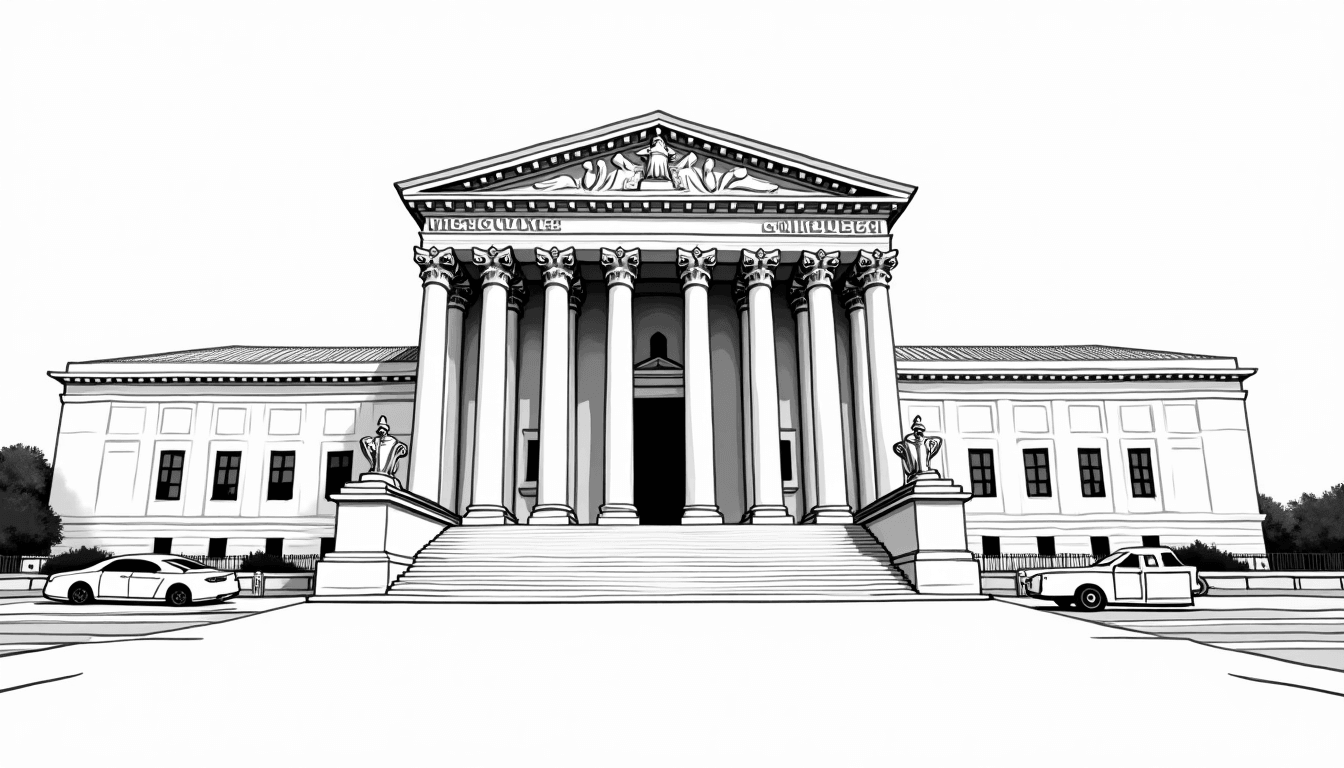
A two-day civil trial in federal court over the University of Florida’s deactivation of its College Republicans chapter concluded Wednesday without an immediate ruling from Judge Mark Walker. Attorneys for the student group argued the university violated their First Amendment rights by disbanding them, and sought to show that administrators including Interim President Donald Landry acted to suppress future speech. The deactivation stemmed from a March incident in which the Florida Federation of College Republicans said it dissolved the chapter following a student’s alleged nazi salute.
Point / Counterpoint
The Ledger is neutral; these essays are not. Each side, as steel-manned as we can make it.
Point
The University of Florida’s decision to stand by the deactivation of its College Republicans chapter reflects a legitimate institutional response to conduct that has no place in a public academic community. The chapter’s troubles did not originate with the university itself — the Florida Federation of College Republicans, the student group’s own governing body, first moved to disband the local chapter after a member was accused of performing a nazi salute. That is not a minor procedural infraction. It is precisely the kind of conduct that university administrators have both the authority and the obligation to take seriously.
The First Amendment does not strip public universities of every tool to respond to student organizations that engage in or tolerate hateful conduct. Courts have long recognized that public institutions can enforce viewpoint-neutral rules of conduct without running afoul of the Constitution, and there is an important distinction between suppressing protected speech and declining to extend official recognition to a group whose parent organization itself found it in violation of basic standards. If the FFCR — not the university administration — initiated the disbanding, characterizing the university’s subsequent actions as a First Amendment chill becomes considerably harder to sustain.
Interim President Donald Landry and other administrators are tasked with maintaining a campus environment where all students can participate fully in university life. A student organization that permits members to perform nazi salutes — even once, even casually — sends a message to Jewish students and others on campus that their dignity is negotiable. The university’s responsibility to those students is not extinguished by the free speech interests of a student club seeking reinstatement.
The broader principle at stake is whether public universities are expected to remain entirely passive in the face of student organization misconduct so long as the group claims a political identity. That reading of the First Amendment would effectively immunize organized student groups from any accountability for the conduct of their members. That cannot be the law, and the university’s position in this litigation — that its actions followed from the FFCR’s own determination, not from a desire to silence political speech — deserves serious weight from Judge Walker as he considers his ruling.
Counterpoint
Whatever one thinks of the conduct that triggered this dispute, the University of Florida’s role in the deactivation of its College Republicans chapter raises serious constitutional concerns that go well beyond the facts of a single incident. The First Amendment’s protection of student political organizations at public universities is not theoretical — it is grounded in decades of Supreme Court precedent, including the foundational ruling in Healy v. James, which held that a public university cannot deny recognition to a student group simply because administrators disapprove of its views or associations.
The attorneys for the UF College Republicans are making a targeted and legally serious argument: that university leaders, including Interim President Donald Landry, used the occasion of the FFCR’s internal disciplinary action as a pretext or a mechanism to suppress a politically affiliated student organization. If evidence presented at trial supports the claim that administrators moved to chill the group’s future speech rather than simply defer to a parent organization’s independent decision, that is a textbook First Amendment violation. The government — and a public university is the government — cannot use private intermediaries to accomplish what it cannot do directly.
It is also worth noting the asymmetry of power in this situation. The university controls official recognition, access to campus resources, meeting space, and the legitimacy that comes with being a sanctioned student group. Stripping those benefits from a political organization, even temporarily, imposes real costs on students who did nothing wrong and whose only association is membership in a partisan club. The First Amendment exists precisely to protect unpopular groups from the instinct of institutions to manage dissent by administrative means rather than open debate.
The proper response to offensive conduct by a student organization member is not to erase the organization. It is accountability for the individual, transparent process, and the kind of open campus dialogue that actually builds community. Allowing UF to deactivate a politically identified student group on these facts — and without a clear, neutrally applied policy basis — would set a precedent that gives university administrators dangerous latitude to sideline student voices whenever an incident provides a convenient hook. Judge Walker’s ruling will matter well beyond Gainesville.
Sources: WCJB TV20