

State & National
Rival confronts Donalds with megaphone at Lake City campaign stop, demands debate
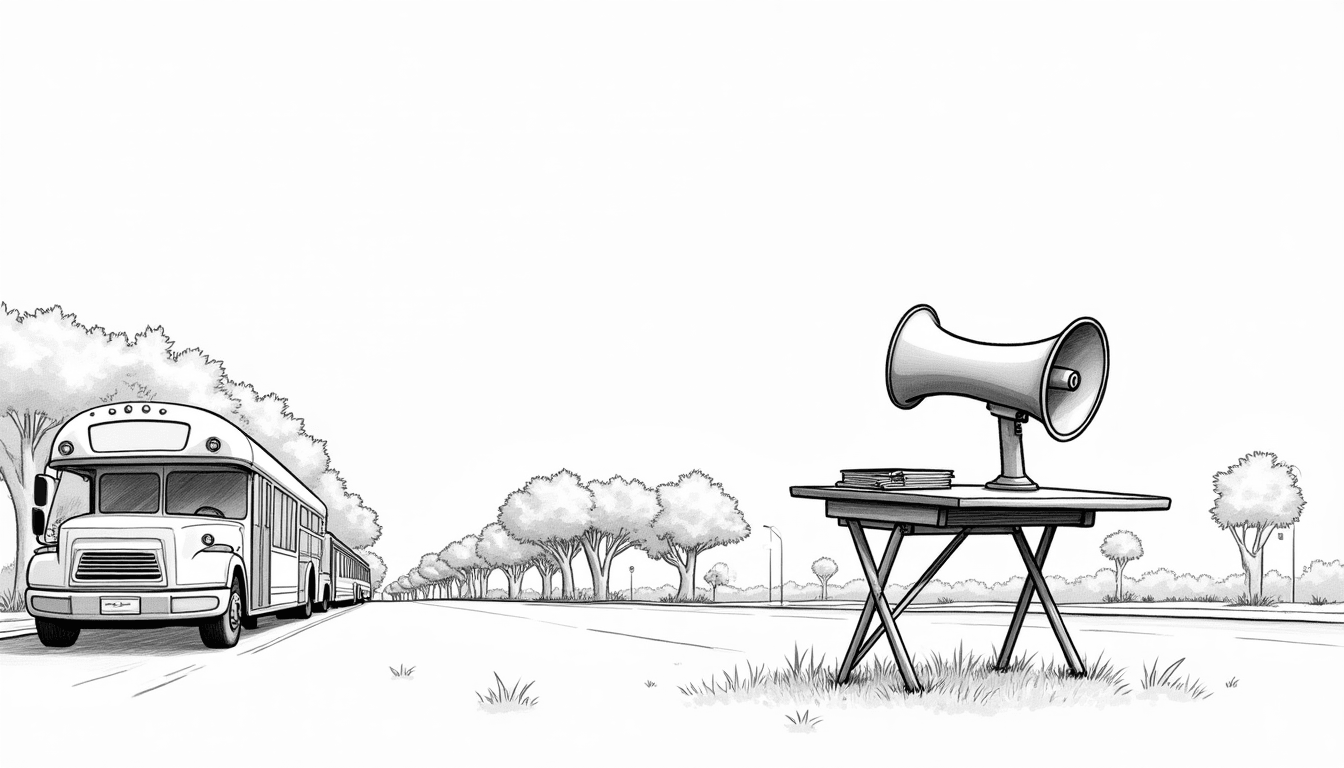
Republican gubernatorial candidate Byron Donalds campaigned across north Florida on Saturday, making stops in Jacksonville, Lake Butler, and Lake City. At his Lake City event, fellow GOP candidate James Fishback stood outside with a megaphone and supporters, demanding Donalds agree to a debate — a call that Gov. Ron DeSantis and Lt. Gov. Jay Collins have also made. Donalds did not respond to Fishback, continuing inside while smiling at the crowd.
Point / Counterpoint
The Ledger is neutral; these essays are not. Each side, as steel-manned as we can make it.
Point
Byron Donalds is under no obligation to debate James Fishback, and his refusal to engage with a megaphone-wielding rival outside a campaign venue is a matter of strategic discipline, not evasion. Donalds is the frontrunner in the 2026 Florida GOP gubernatorial primary, backed by former President Donald Trump and drawing crowds from Jacksonville to Columbia County. Debates benefit challengers, not frontrunners — they elevate lesser-known candidates to the same stage as the presumptive leader, granting legitimacy and earned media to campaigns that could not otherwise command it. Every seasoned political strategist understands this asymmetry.
Donalds’s campaign-trail focus — fielding questions from voters on property taxes, education, and law enforcement — represents exactly the kind of substantive retail politics that builds durable coalitions. That is a more meaningful form of democratic accountability than a televised debate staged to manufacture conflict. Voters in Lake Butler and Lake City had direct access to the candidate and his positions. That is the substance of a campaign.
Fishback’s stunt — livestreaming on social media while yelling through a megaphone about a prior insult — is not a policy argument. It is a performance designed to generate viral content, not to serve voters. The accusation he shouted, rehashing a personal grievance about being called a racist, illustrates exactly why Donalds has little incentive to share a stage with him. Debating a candidate whose primary strategy is provocation rewards the provocation.
The calls for a debate from DeSantis and Collins are similarly self-interested — both trails Donalds in polling and would benefit from forcing him onto a level playing field. Frontrunners from Ronald Reagan to Barack Obama have declined primary debates when the strategic calculus argued against them. Donalds is doing nothing unusual. His campaign is well-resourced, his message is reaching voters, and declining to be ambushed outside a campaign event is not a disqualification — it is good judgment.
Counterpoint
A gubernatorial primary is not a coronation, and Byron Donalds’s repeated refusal to debate his Republican rivals raises a legitimate and important question: does he believe Florida voters deserve to see him tested before they hand him the state’s highest office? The demand for a debate is not merely a tactical gambit by Fishback, DeSantis, and Collins — it reflects a democratic norm that candidates for major office should be willing to defend their positions publicly against direct challenge.
Donalds has benefited enormously from national name recognition and a high-profile presidential endorsement, advantages that have little to do with his specific plans for Florida. Property taxes, education funding, water policy, and law enforcement priorities are state-level issues that require state-level answers. Voters in Lake Butler and Lake City deserve more than a curated campaign stop where the candidate controls the room. A debate forces specificity, and specificity is where the difference between candidates becomes visible.
The manner in which Fishback pressed his case — loudly, publicly, and with obvious frustration — reflects how asymmetric the race has become. When one candidate has the institutional backing to simply ignore rivals, the normal mechanisms of democratic accountability break down. Fishback’s megaphone approach may be unorthodox, but it speaks to a genuine structural problem: there is currently no forum in which Donalds must answer for his record or his platform on equal terms. That benefits no one except Donalds himself.
Florida’s Republican primary electorate deserves a rigorous contest. The state faces real and complicated challenges — insurance costs, growth pressures, water infrastructure, and school funding among them — and the GOP’s nominee will almost certainly become governor. The voters who will make that decision should have the chance to see the candidates interrogated, challenged, and forced to go beyond stump-speech generalities. Declining to debate is a choice that prioritizes winning over governing, and Florida voters should notice the difference.
Sources: WCJB TV20