

Education
Alachua County School Board rejects plan to buy Citizens Field from city
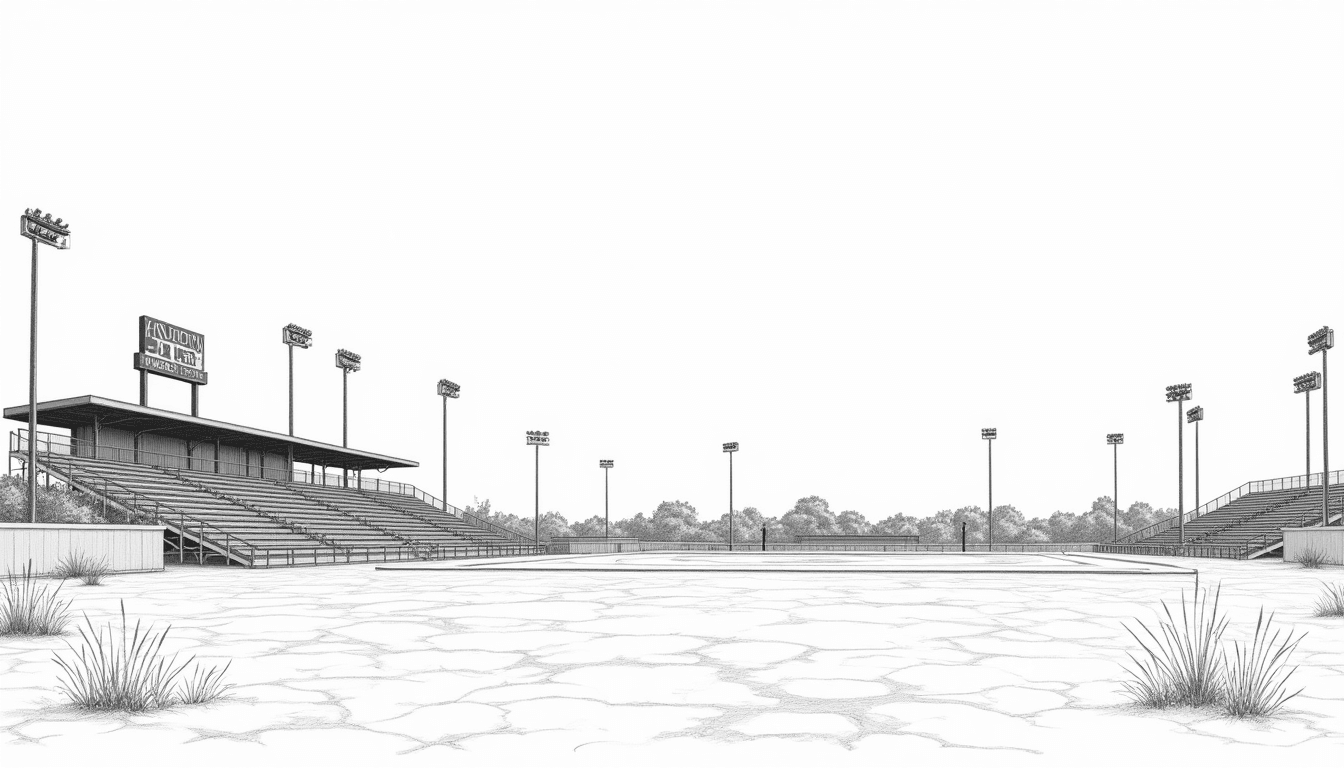
The Alachua County School Board voted Tuesday against purchasing Citizens Field from the city of Gainesville, citing reluctance to take on the financial burden and unwillingness to partner with the city. Board members debated several motions before reaching their decision. District documents indicate a full demolition and rebuild of the stadium — which is currently shared by Buchholz, Eastside, and Gainesville high schools — could run between $22 million and $25 million.
Point / Counterpoint
The Ledger is neutral; these essays are not. Each side, as steel-manned as we can make it.
Point
The School Board made the right call in rejecting the Citizens Field purchase, and the reasoning is straightforward: public school systems are not in the business of owning aging municipal stadiums, and the financial exposure here is simply too great.
District documents pegged a full demolition and rebuild of Citizens Field at somewhere between $22 million and $25 million. That is not a rounding error — it is a capital commitment that would compete directly with classroom investments, teacher compensation, and the kind of infrastructure spending that actually affects student outcomes every day. School boards across Florida are perpetually squeezed between state funding formulas and local millage caps. Taking on the long-term maintenance and capital liability of a stadium that requires that level of investment would be fiscally reckless at a moment when the district has no shortage of other pressing needs.
Beyond the dollars, there is a governance question. Citizens Field is a city of Gainesville asset. The relationship between the city and the school district has not always been smooth, and several board members made clear they are not eager to formalize a new financial entanglement with city leadership. That skepticism is not petty — it reflects a reasonable judgment about who controls decision-making and who bears the risk when something goes wrong with a jointly managed or transferred property. School boards exist to serve students, not to absorb municipal liabilities.
The board’s instinct to compare the Citizens Field scenario against alternatives — whether three separate campus-based stadiums or a different consolidated site — is exactly the kind of deliberate analysis that large capital decisions demand. Rushing into a $100,000 deposit on a property whose true renovation costs could approach $25 million, without a full design-phase accounting of what the money actually buys, would have been a failure of fiduciary duty. The vote to pause, compare, and demand better information before committing public dollars is governance working as it should.
Counterpoint
The School Board’s rejection of the Citizens Field purchase is a short-sighted decision that prioritizes discomfort over opportunity, and the students who compete at that facility will pay the price.
Citizens Field has served Buchholz, Eastside, and Gainesville high schools for years precisely because a shared venue makes sense for a district of this size. Three separately maintained stadiums — the alternative board members floated — would almost certainly cost more in total than a single consolidated facility, both upfront and in perpetual operating expenses. The $22 million to $25 million rebuild estimate is not a reason to walk away; it is a reason to negotiate hard, phase the investment, and pursue grant and state capital outlay funding aggressively. Florida’s Public Education Capital Outlay process exists for exactly this kind of project.
The board’s stated reluctance to work with the city of Gainesville is particularly troubling as a rationale. Intergovernmental cooperation between a municipality and its school district is not optional — it is the baseline expectation of functional local governance. If the relationship has grown strained, the answer is to repair it, not to let it dictate a decision about where thousands of high school athletes will compete for the next generation. Allowing institutional friction to drive a capital facilities decision is letting the tail wag the dog.
Board member Sarah Rockwell’s own comments at the meeting revealed the real problem: the board wants more information before committing. That is understandable, but the solution was not to vote the purchase down — it was to condition approval on completing a proper design-phase comparison. The district could have secured the option to purchase Citizens Field while simultaneously commissioning the comparative analysis Rockwell described. Instead, the board slammed the door on a concrete opportunity in favor of a vague future process with no timeline, no cost estimate, and no guarantee the city’s offer remains on the table. Indecision dressed up as prudence is still indecision.
Sources: WCJB TV20