

State & National
Florida social media deplatforming law heads to trial after years of legal battles
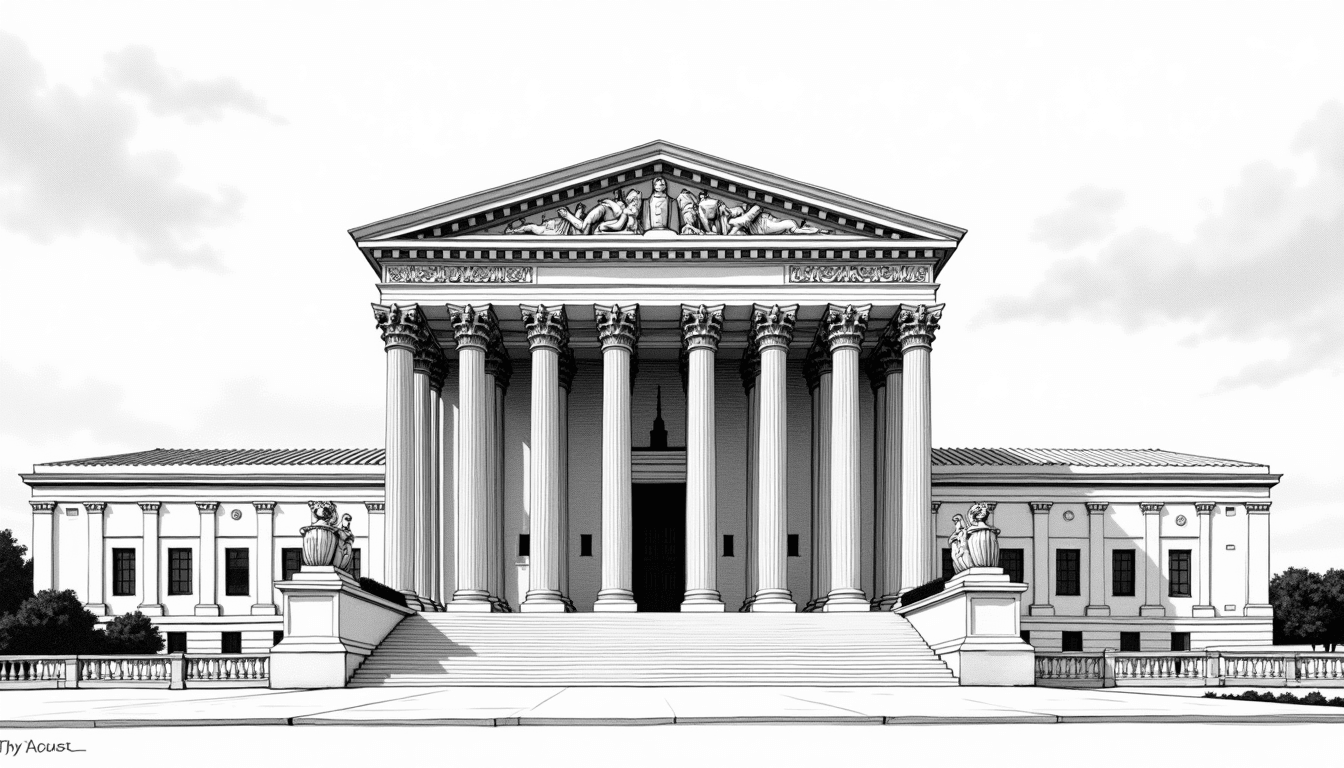
A federal judge in Tallahassee has scheduled a trial to determine whether Florida’s social media law — which would fine platforms $100,000 for removing a statewide political candidate and require disclosure of content moderation practices — can take effect. The law has been blocked since 2021 on First Amendment grounds, and though the U.S. Supreme Court previously sent the case back for review, Florida cannot enforce the law while the trial proceeds. A tech industry trade association argues the law still violates the First Amendment and expects to prevail.
Point / Counterpoint
The Ledger is neutral; these essays are not. Each side, as steel-manned as we can make it.
Point
Florida’s social media deplatforming law represents a necessary and principled check on the extraordinary power that a handful of private technology companies have accumulated over public political discourse. The companies subject to this law are not local corner stores — they are global monopolies whose platforms function as the modern public square, where candidates seek votes, citizens organize, and elections are effectively shaped. When those platforms can silently remove a statewide political candidate with no transparency and no recourse, voters are harmed, not just the candidate.
The core of Florida’s law is straightforward accountability: platforms must publish their content moderation standards, they must give users certain opt-outs, and they face fines if they remove political candidates without justification. None of this prohibits a platform from having editorial standards. It simply requires them to apply those standards visibly and consistently. That is not censorship of the platform — it is transparency demanded of a powerful actor operating in the public interest.
The law’s opponents invoke the First Amendment, but that argument proves too much. The First Amendment was designed to protect citizens and speakers from government suppression — not to give corporations an absolute shield from any regulation of how they moderate speech at scale. Common carriers, broadcasters, and telephone companies have all operated under regulatory frameworks that required some degree of non-discrimination. The legal tradition of distinguishing between editorial discretion and common-carrier obligations is well established; the question is simply where these dominant platforms fall on that spectrum.
Florida legislators who passed this law understood that the deplatforming of political figures — including a sitting president in 2021 — represented a genuine threat to democratic participation. Whatever one’s view of those specific decisions, granting a small number of private companies unchecked authority to silence political speech during election cycles is incompatible with a functioning democracy. This trial is an opportunity for a court to finally weigh those stakes directly, on the merits, after years of procedural maneuvering.
Counterpoint
Florida’s social media deplatforming law has now survived long enough to reach trial, but that longevity does not make it constitutional. The law remains what it has always been: a government mandate telling private companies what speech they must host — precisely the kind of compelled editorial decision-making that the First Amendment prohibits. A federal judge blocked it in 2021 for exactly this reason, and the legal landscape has not fundamentally shifted in Florida’s favor.
The tech industry trade association challenging the law is right to be confident. The Supreme Court’s decision to send the case back for another look did not endorse the law; it instructed the lower court to work through the analysis more carefully. And that analysis leads back to the same place: private platforms have a First Amendment right to make choices about what content appears on their services. That right was recognized in Hurley v. Irish-American Gay Group, in PruneYard Shopping Center, and affirmed again in the Supreme Court’s own recent handling of related challenges from Texas and Florida. The principle is clear — government cannot compel a private entity to carry speech it would otherwise decline to carry.
Floida’s law also creates a deeply troubling asymmetry. It offers special protection to political candidates, immunizing them from content moderation that applies to ordinary users. That is not a neutral rule — it is the government placing its thumb on the scale in favor of a specific class of speakers, in ways that could entrench incumbents and insulate political figures from accountability for harmful content. The $100,000-per-day fine for deplatforming a candidate is less a deterrent against bias than a cudgel against moderation itself.
Social media platforms are not the telephone network. They curate, recommend, amplify, and suppress content as an integral part of their product. That curation is expression. Requiring them to carry political candidates regardless of conduct, and to publish their internal deliberations about shadow-banning, conscripts their editorial process into state service. The trial ahead may be the first full hearing on the merits, but the First Amendment question at its center has a well-established answer — and Florida’s law is on the wrong side of it.
Sources: WCJB TV20