

City
New state law deepens fight over Gainesville Regional Utilities
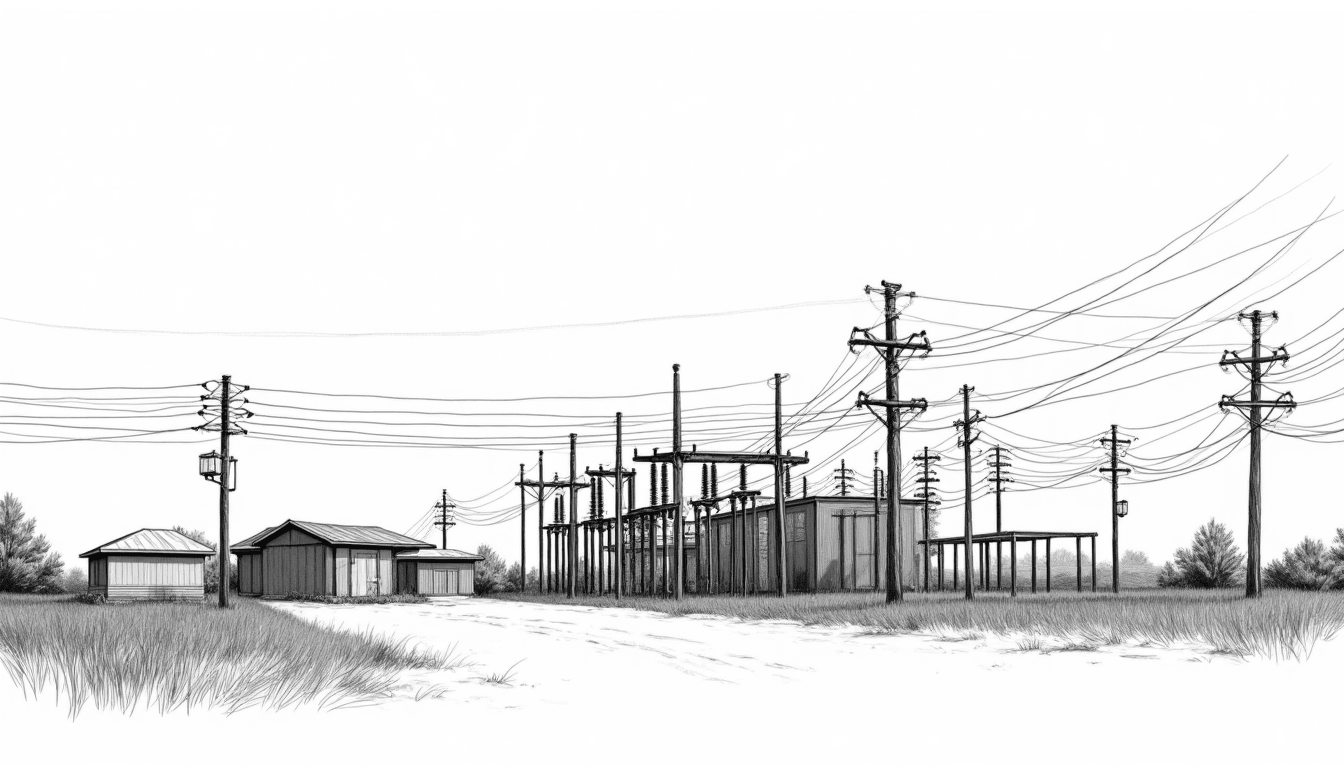
A newly enacted state law has escalated the ongoing dispute over control of Gainesville Regional Utilities, according to the Florida Alligator. GRU’s CEO warned the legislation could be devastating for the city’s standing in the long-running conflict.
Point / Counterpoint
The Ledger is neutral; these essays are not. Each side, as steel-manned as we can make it.
Point
The state legislature’s decision to pass a new law affecting GRU reflects a legitimate and overdue exercise of oversight over a municipally owned utility that has struggled for years under city management. Gainesville’s repeated difficulties with GRU — from rate controversies to governance disputes — have demonstrated that local political control of a large public utility does not automatically serve ratepayers well. When a city’s management of a critical infrastructure asset becomes entangled in political battles to the point where its own CEO warns of existential consequences, that is precisely the moment when higher-level intervention is warranted.
State legislatures routinely set the framework within which local governments operate, and utility regulation is an area where statewide standards protect consumers regardless of municipal boundaries. GRU serves tens of thousands of customers whose electric bills and service reliability should not be held hostage to local political disputes. Florida has a clear interest in ensuring that utilities operating within its borders meet consistent standards of financial and operational performance. A law that imposes new accountability mechanisms or structural changes is not an attack on local governance — it is an application of the state’s well-established authority over public utilities.
Critics of state intervention often invoke home rule as a near-absolute principle, but home rule is not without limits. It has never meant that a city may operate a public utility without accountability to the broader legal and regulatory environment. The history of GRU governance — including the legislature’s earlier creation of an independent authority to oversee it — shows that state involvement did not arise from nowhere. It was a response to documented dysfunction. The new law continues that trajectory of accountability-seeking, not as political retaliation, but as a structural correction.
For GRU ratepayers and Gainesville residents, stability and competent management matter far more than the abstract question of which level of government holds formal authority. If the new law creates clearer lines of responsibility, stronger financial oversight, or reduced opportunities for politically motivated decision-making at the utility, then residents will benefit — regardless of how the city’s leadership characterizes the legislation.
Counterpoint
Whatever structural problems have existed at Gainesville Regional Utilities, the solution should come from Gainesville’s voters and elected officials — not from a state legislature that has shown a pattern of targeting municipalities whose political leanings differ from the Capitol’s majority. The new law must be understood in that context. When state lawmakers repeatedly intervene in the affairs of one of Florida’s most progressive cities, the cumulative effect is not good-government reform; it is the erosion of the local self-determination that home rule is designed to protect.
GRU is a municipally owned utility — owned, in the most direct sense, by the people of Gainesville. The decision of how to govern it, what rates to charge, and what management structure to adopt are exactly the kinds of decisions that democratic theory assigns to local communities. Gainesville residents can vote out city commissioners who mismanage the utility. They can attend public meetings, file complaints, and organize politically. State intervention short-circuits all of those democratic accountability mechanisms, replacing local judgment with decisions made by legislators who do not pay GRU bills and will not live with the consequences.
The GRU CEO’s warning that this law could be the nail in the coffin for the city is not hyperbole to be dismissed — it is an on-the-ground assessment from someone with detailed knowledge of the utility’s financial and operational situation. When the person responsible for running GRU describes a law as potentially fatal, policymakers have an obligation to take that seriously rather than treating it as acceptable collateral damage in a political battle. Laws that destabilize functioning public infrastructure harm real ratepayers in ways that are difficult to reverse.
The principle at stake extends well beyond GRU. A state government willing to pass targeted legislation against a specific municipality’s utility sets a precedent that no local government can ignore. If Gainesville today, any Florida city tomorrow. The defense of local governance is not a defense of any particular decision GRU has made — it is a defense of the principle that communities have the right to make and correct their own decisions without the threat of state override every time Tallahassee disapproves.
Sources: The Independent Florida Alligator