

Public Safety
Debate grows over police security cameras in Florida
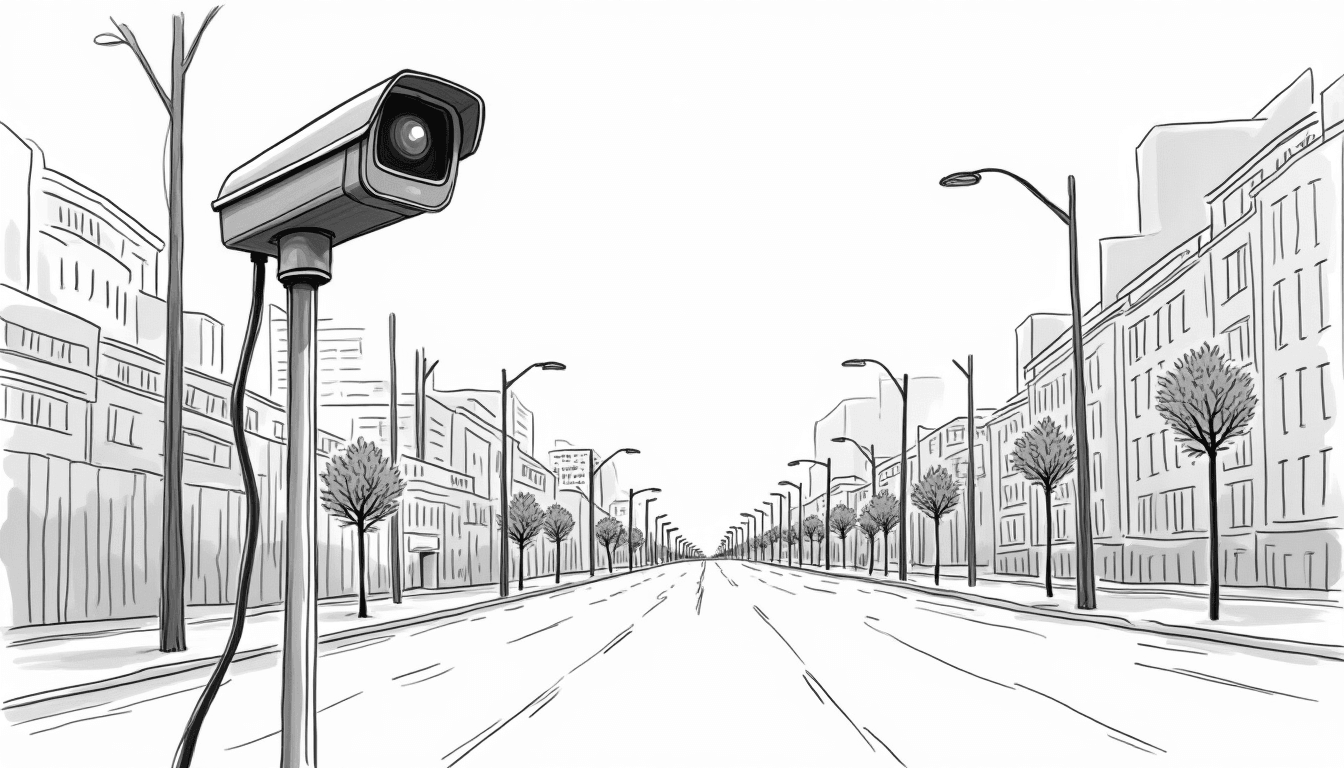
A conflict is intensifying in Florida over the expansion of police-operated security cameras, with critics raising surveillance concerns and law enforcement arguing the technology helps deter and solve crime. The dispute reflects a broader national tension between public safety tools and civil liberties.
Point / Counterpoint
The Ledger is neutral; these essays are not. Each side, as steel-manned as we can make it.
Point
The case for police security cameras in Gainesville and across Florida rests on a straightforward premise: deterrence works, and documentation saves lives. When cameras are placed in high-crime corridors, studies from cities like Chicago and Baltimore have consistently shown reductions in violent incidents in the immediate vicinity. Law enforcement agencies argue they are not asking to peer into private homes — they are monitoring public spaces where citizens already have a diminished expectation of privacy under long-established legal doctrine. The footage gathered by these systems has helped prosecutors secure convictions, helped investigators identify suspects in cold cases, and, in some instances, has exonerated people wrongly accused.
For a city like Gainesville, where property crime and occasional violent incidents strain a department that cannot place an officer on every corner, cameras represent a force multiplier. A fixed camera covering a transit stop or a downtown parking garage allows officers to be deployed more strategically, responding to confirmed incidents rather than patrolling blindly. The technology has grown more sophisticated — modern systems can alert dispatchers in real time to gunshot sounds or unusual crowd behavior — meaning the cameras are not passive recorders but active tools that can compress response times.
The pushback, while understandable, often conflates the technology itself with the policies governing its use. A camera is not inherently an instrument of oppression; it is a piece of equipment whose impact depends entirely on the rules around retention, access, and oversight. Many jurisdictions have adopted strict policies limiting how long footage is stored, who may review it, and under what legal standard a recording may be used in court. Gainesville’s residents and their elected representatives can demand those guardrails — and should — without abandoning the tool altogether.
Ultimately, public safety is itself a civil liberties issue. The freedom to walk to a bus stop without fear, to operate a small business without worrying about repeat break-ins, to live in a neighborhood where disputes don’t escalate unchecked — these are liberties too, and they fall disproportionately on lower-income communities when law enforcement is under-resourced. Dismissing cameras as surveillance overreach ignores the communities most likely to benefit from them.
Counterpoint
The expansion of police security cameras across Florida deserves far more scrutiny than it typically receives, and the framing of the debate as simply “safety versus privacy” obscures what is really at stake. Every camera added to the public landscape is a permanent infrastructure decision — once the hardware is installed and the data pipelines are built, the temptation to expand their use rarely diminishes. What begins as a network of cameras at high-crime intersections quietly becomes the backbone of a real-time tracking system capable of logging the movements of every resident who passes by. Florida has no comprehensive statewide law governing how long police may retain surveillance footage, who may access it, or when it may be shared with federal agencies — a vacuum that invites mission creep.
The promise of deterrence is also considerably more contested than advocates acknowledge. Research on camera effectiveness is mixed: some studies find modest displacement of crime rather than genuine reduction, meaning criminal activity moves to unmonitored blocks rather than disappearing. Meanwhile, the communities most densely covered by police cameras are frequently the same communities that already experience disproportionate law enforcement contact. More surveillance does not automatically mean more safety for those residents — it can mean more pretextual stops, more low-level arrests for conduct that would go unnoticed elsewhere, and a chilling effect on lawful public assembly and expression.
Facial recognition and automated license-plate reader technology are increasingly integrated with fixed camera networks, raising the stakes considerably. Facial recognition systems have documented error rates that fall hardest on Black and Latino individuals, a pattern acknowledged by the federal government’s own National Institute of Standards and Technology research. When a misidentification leads to a wrongful detention — as has already occurred in multiple documented cases in other states — the harm is not abstract. It is a person handcuffed in front of their family based on a flawed algorithm, with no immediate recourse.
Gainesville residents deserve a full public accounting before any camera expansion moves forward: Where will cameras be placed, and by what criteria? Who reviews the footage, and under what legal standard? How long is it retained, and can it be shared with immigration enforcement or other agencies? These are not obstructionist questions — they are the minimum due diligence a democracy owes its citizens before building infrastructure that, once erected, is rarely dismantled.
Sources: The Gainesville Sun