
The Gainesville Ledger Entertainment
ARTIST PREVIEW
Santigold plays Heartwood on Wednesday, three years after telling the music business she was done.
A $60 ticket and the artist whose 2022 open letter became the touring industry’s most-quoted obituary.
By Craft Lemon · Sunday, May 17, 2026
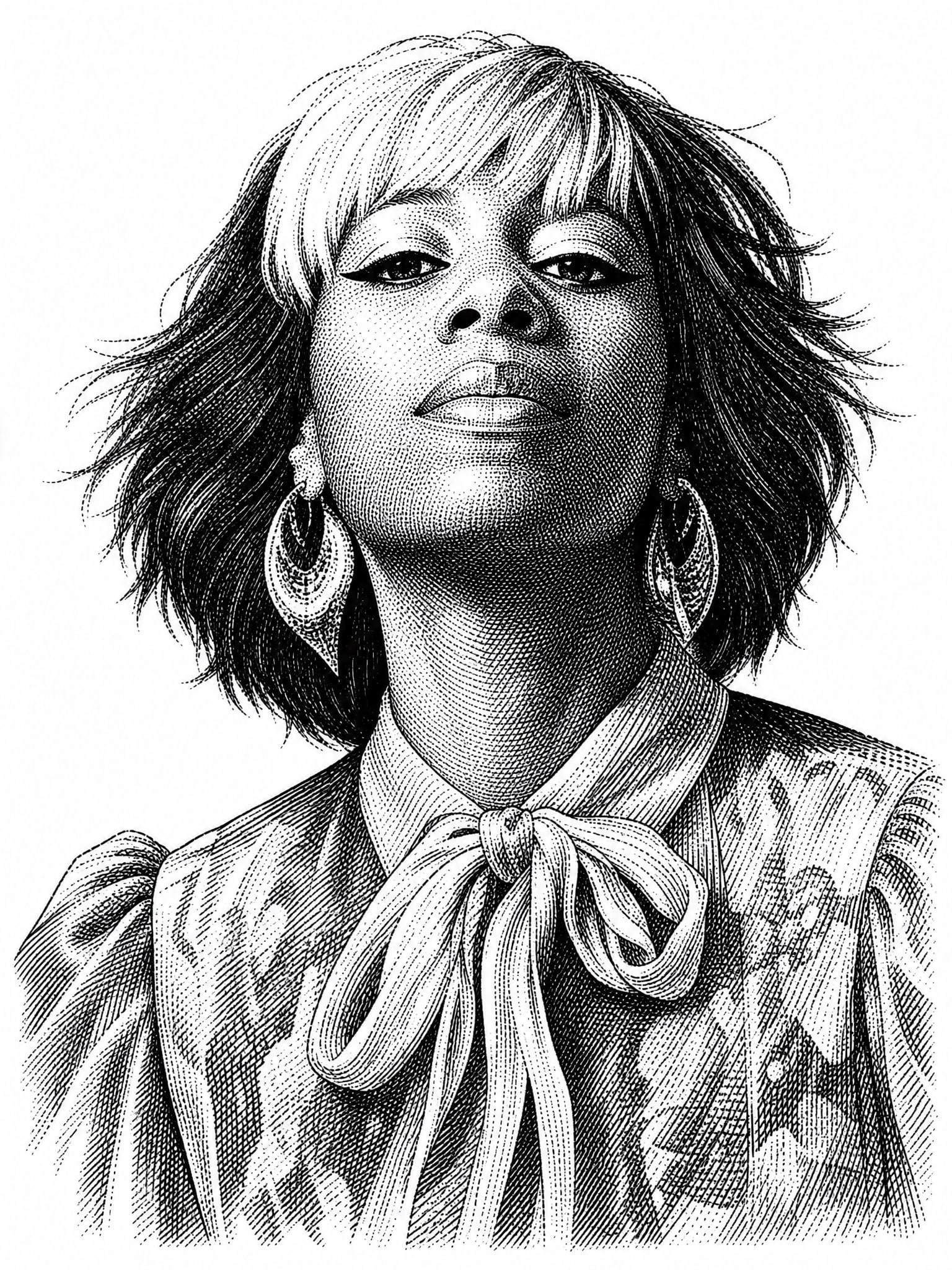
In September 2022 Santigold cancelled her tour and wrote a letter the music business is still arguing about. Wednesday she plays Heartwood.
The 2026 run is her first proper North American return since. It opened May 14 at Pappy and Harriet’s in Pioneertown, California, and moved through Los Angeles, San Francisco and Raleigh before turning south. Gainesville is the fifth stop. St. Petersburg’s Jannus Live is Friday. Miami the day after. Tickets are $60, show at 7.
The letter was the news. Santi White had released “Spirituals,“ her fourth album, on September 9, 2022, with a North American tour scheduled to follow: Atlanta, Silver Spring, Philadelphia, Boston, Brooklyn, Montreal, Toronto, Chicago. Two and a half weeks after the release she pulled the entire route. She wrote about anxiety, insomnia, vertigo, fatigue, chronic pain. About three small kids and a tour-bus economy that had stopped mathing. About venues booked out, gas costs through the roof, positive COVID tests halting schedules with what she called “devastating financial consequences.“ About an industry, in her words, “uninterested in the welfare of the artists it is built upon.“
The line that got the most circulation, the one passed around for months in artist group chats and trade-press think pieces, was the one explaining why she was canceling. “I am proud to be canceling this tour when it means that I am proclaiming that I, the person who writes the songs, is as important to me as the songs.“ She did not promise to come back. A lot of artists nodded. A lot of fans got their refunds.
She told Rolling Stone shortly after that the problem predated the pandemic. “The system was already broken,“ she said. “People were just trying to hold on, pre-pandemic.“ Other artists started canceling tours in the same window, citing similar reasons. The letter became reference material.
She did not stop making music. In the years since the cancellation she sang backing vocals on Tyler the Creator’s “Igor,“ collaborated with him on a Grinch-inspired Christmas song called “Lights On,“ and recorded a cover of “Man Next Door” with the reggae pioneer U-Roy for what turned out to be his final album. Beyoncé shouted her out on the “Break My Soul” remix in 2022. She did a punk-leaning NPR Tiny Desk set the same year. Festival appearances came in 2024: BeachLife in Redondo Beach, Seattle Pride. A few headlining stops since. This spring is the first time she has put a real string of clubs on a calendar. They are the kind of rooms an artist books when she has stopped trying to play arenas, or has stopped wanting to.
A bit more, for the reader who knows the singles but not the resume. Santi White grew up in Mount Airy, Philadelphia, attended Germantown Friends, and studied music and African-American studies at Wesleyan, where she focused in part on ethnomusicology and the cross-currents between Jamaican and African music. Her father played reggae in the house when she was a kid. She has called Jamaica, where the family spent summers, a second home. After Wesleyan she worked an A&R job at Epic Records and fronted a Philadelphia rock band called Stiffed until the band ended in 2006. The pivot from band singer to solo artist with a beat-driven, genre-promiscuous sound was the move that made her career.
The debut, released in 2008 under the name Santogold, won that year’s NME Award for Best Breakthrough and a BRIT nomination. It also drew a lawsuit from a Baltimore jewelry-infomercial pitchman named Santo Gold, whose only prior credit was a 1985 sci-fi wrestling movie called “Blood Circus” that he had financed himself and filmed at the Baltimore Civic Center. The suit alleged the singer was “crushing his hopes of continuing his music and acting career.“ It settled. She changed the spelling.
She has been Santigold since.
She then opened, in roughly this order, for M.I.A., Björk, Coldplay, Jay-Z, Kanye West and the Beastie Boys. “Master of My Make-Believe” (2012) reached No. 21 on the Billboard 200. “99¢“ (2016) hit No. 6 on Billboard’s Alternative chart and arrived with a tour built around a single image: the album cover shows Santigold shrink-wrapped like a bargain-bin product, and the supporting run was called the We Buy Gold Tour. The point was the price of a song on iTunes versus the value of the work. Streaming was already eating the math. The 99¢ era was her telling the audience as much.
There was a smaller release in between: “I Don’t Want: The Gold Fire Sessions,“ a 2018 dancehall mixtape recorded with the producer Dre Skull over a couple of weeks of writing sessions, with a few unreleased fragments from earlier collaborations with Diplo and Ricky Blaze threaded in. She tracked the last vocals nine months pregnant with twins. It is the loosest record in her catalog and the one she most clearly enjoyed making.
She did not release another full-length for six years. “Spirituals” came in 2022 on her own label, Little Jerk Records, mostly written in lockdown with three kids underfoot and California on fire. The collaborator list was a small federation of producers willing to work over the wire: Rostam, Nick Zinner, SBTRKT, Boys Noize, Doc McKinney, Illangelo and others. Pitchfork, NPR, Rolling Stone, The Guardian and NME praised it. Then she cancelled the tour.
A Santigold show, for the reader who has not seen one, is a fully choreographed production: the SG1 dancers, costuming and visual design that she curates herself, video backdrops, multiple costume changes, and a setlist that, on recent dates, has opened with “GO!“ and “L.E.S. Artistes” and worked through “Creator,“ “Shake,“ “Shove It,“ “Disparate Youth,“ “Unstoppable” and “Lights Out.“ Fans tend to get pulled on stage at some point. The visuals carry as much of certain songs as the band does. People who have seen the show more than once tend to mention the costuming first. Reviewers on this run have complained, mostly, that the set is too short. That is the complaint a touring artist wants.
Whether the tour signals a new album is unclear. “Spirituals” is almost four years old. The 2026 dates are being billed as a career-spanning set rather than a new-record cycle, which is the polite industry phrase for: she is going to play the songs you want to hear. She has been working in formats other than full-lengths since the cancellation. The Tyler collaborations. The U-Roy cover. The Gold Fire Sessions ethic of two weeks in the studio and a finished thing on the way out. Ongoing visual-art collaborations with Kehinde Wiley, Wangechi Mutu, Kara Walker and Sanford Biggers. A podcast project. The album as a unit is no longer obviously the center of the work.
What the 2026 tour suggests, taken with the letter, is that the live show has been reconfigured to a scale she can sustain. Fifteen dates between May and October. Mid-sized rooms. No bus-and-truck arena run. Festivals where the festival pays for the staging. The math, presumably, now maths.
Wednesday. Doors 6:45. Show 7. Sixty dollars at the venue’s site, while they last.