

Education
Santa Fe College’s $17M workforce training center sparks neighborhood traffic worries
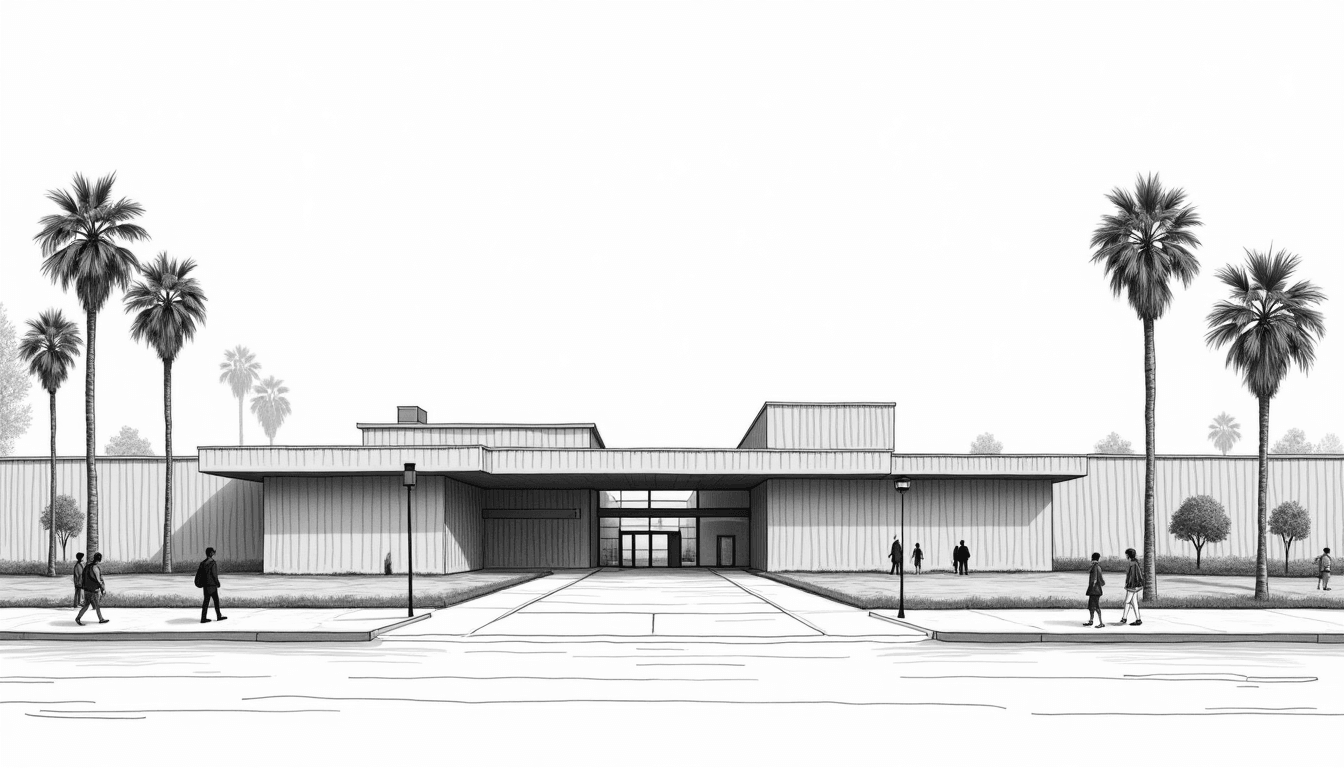
Santa Fe College plans a $17 million workforce training facility at its Blount Center campus near Northwest 6th Avenue, drawing general support from city commissioners who see it as a valuable downtown investment. However, residents along Pleasant Street and nearby blocks have raised concerns about increased traffic and pedestrian safety in the surrounding neighborhoods. Commissioner Desmon Duncan-Walker spoke in favor of the project, praising Santa Fe College’s efforts to bring educational opportunities closer to the urban core.
Point / Counterpoint
The Ledger is neutral; these essays are not. Each side, as steel-manned as we can make it.
Point
The $17 million workforce training center proposed for Santa Fe College’s Blount Center campus represents exactly the kind of intentional, equitable investment that Gainesville’s urban core has long needed. City commissioners are right to back this project enthusiastically, and residents who oppose it on traffic grounds should weigh that concern against the broader public good the facility will deliver.
Workforce training programs are among the most direct pathways out of poverty available to working-class residents. Skilled trades — electricians, HVAC technicians, welders, medical technicians — are in chronic short supply across north-central Florida, and community colleges like Santa Fe are uniquely positioned to fill that gap at low cost to students. By siting this center at the Blount Center campus, near the urban core rather than tucked away at the main campus on Northwest 83rd Street, the college is explicitly trying to serve residents who lack transportation or who face other barriers to access. That is a meaningful act of institutional equity.
Commissioner Duncan-Walker’s remarks reflect a vision that local government should actively pursue: bringing opportunity into the neighborhoods that have historically been underserved rather than expecting residents to travel to it. A $17 million public investment in skills training near downtown is the kind of anchor development that can generate lasting economic mobility for the surrounding community — not just for those who enroll, but for the small businesses and households that benefit when more local workers command higher wages.
Traffic concerns are legitimate and deserve thoughtful engineering responses — crosswalk improvements, signal timing adjustments, perhaps a traffic study — but they are solvable problems. The alternative, declining to build workforce infrastructure in underserved neighborhoods because existing residents find it inconvenient, is a far more serious failure. Communities that have consistently blocked infill development and institutional expansion in the name of neighborhood character have often done so at the cost of the very residents who most needed the services those institutions would have provided. Gainesville should not repeat that mistake here.
Counterpoint
Neighborhood residents raising concerns about the Blount Center training facility are not anti-education obstructionists — they are people who live on Pleasant Street and adjacent blocks and who have every right to ask hard questions about what a major institutional expansion will mean for their streets, their sidewalks, and their daily safety. Those concerns deserve more than reassurances; they deserve a concrete plan.
Traffic and pedestrian safety in Gainesville’s older urban neighborhoods are not abstract worries. Many of the streets near the Blount Center campus were not designed to handle the volume of vehicles that a large educational facility generates at peak hours. Students, faculty, and visitors arriving by car need somewhere to park; that pressure inevitably spills into residential blocks. Pedestrians — including children walking to nearby schools or elderly residents moving through the area — face real risk when vehicle volumes increase without corresponding infrastructure improvements. Citing a project as an investment in the community does not automatically make the surrounding streets safe.
It is worth noting that institutional enthusiasm for a project and community readiness for its impacts are two different things. City commissioners expressing support for Santa Fe College’s mission is not the same as demonstrating that the traffic, parking, and pedestrian infrastructure surrounding Northwest 6th Avenue is adequate for this scale of development. Those are empirical questions that require engineering studies, community input sessions, and binding commitments to mitigation — not just statements of appreciation for the college’s work.
The residents who raised these concerns are not opposing workforce development. By many accounts, they support the training center’s goals. What they are asking for is a development process that treats their safety as a non-negotiable condition of approval rather than a secondary consideration to be addressed after the fact. That is a reasonable standard to hold any $17 million project to, and the city commission should require it before granting final approval.
Sources: WCJB TV20